
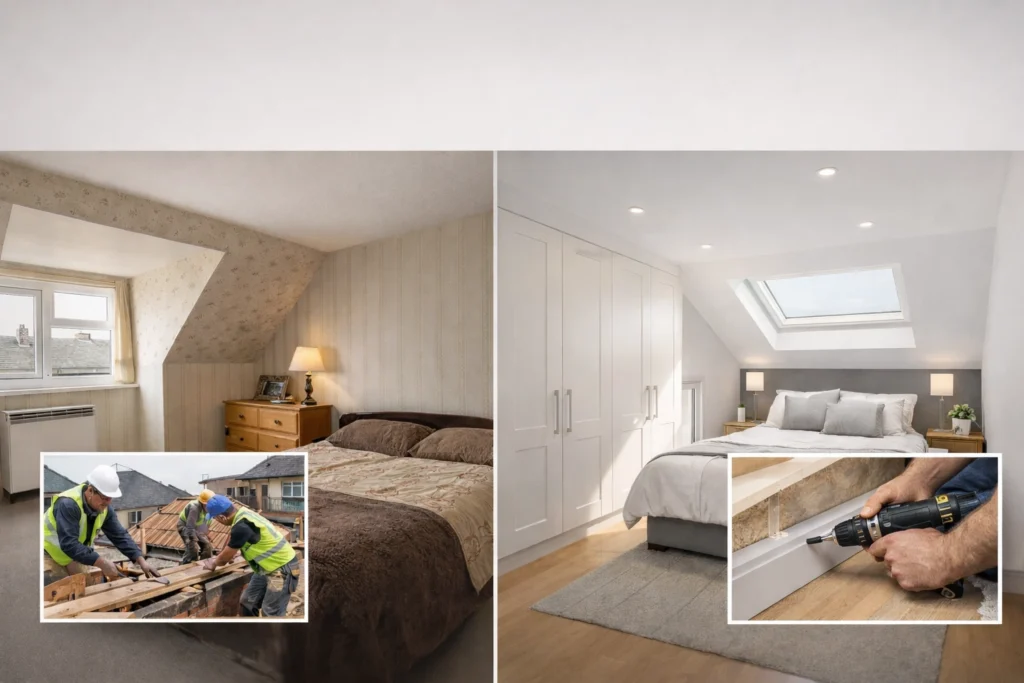
As we navigate the property market in 2026, homeowners in Epping are facing a familiar dilemma: is it better to move to a larger house or invest in the one they already own? With the rising costs of stamp duty, estate agent fees, and the general friction of relocating, many are looking upward: specifically to their loft space.
The question of whether a loft conversion in Epping truly adds value is no longer just about square footage. It is about how that space meets the demands of a modern, post-pandemic lifestyle where home offices, energy efficiency, and high-quality finishes are non-negotiable for buyers. This guide explores the tangible financial benefits and the strategic advantages of converting your attic space in today’s market.
The Epping Property Market: A 2026 Perspective
Epping has long been a jewel in the London commuter belt. Its unique position: offering the Central Line's connectivity alongside the immediate access to Epping Forest: ensures that property demand remains consistently high. However, in 2026, we are seeing a shift in what buyers prioritise.
The "race for space" has evolved into a "race for smart space." It is no longer enough to have a large house; the house must be functional. In a town where traditional Victorian and 1930s homes are common, the loft represents the last untapped frontier for many homeowners. Because Epping is surrounded by Green Belt land, new-build opportunities are limited, which naturally drives up the value of extended period properties.
Quantifying the Added Value of a Loft Conversion
Data from recent years suggests that a well-executed loft conversion remains one of the most profitable home improvements a homeowner can undertake. Across the UK, and particularly in the Greater London area, a loft conversion can increase a property’s value by anywhere from 10% to 25%.
From Three Bedrooms to Four
One of the most significant jumps in valuation occurs when a property moves from a three-bedroom to a four-bedroom home. In the Epping market, this transition can add up to 24% to the property's total value. For a home valued at £600,000, that could represent an increase of £144,000: frequently far exceeding the cost of the construction itself.
To achieve this maximum ROI, the conversion typically needs to include:
- A large double bedroom with sufficient head height.
- An integrated en-suite bathroom.
- High-quality natural lighting (such as Juliet balconies or large Velux windows).
- Seamless integration with the existing staircase to ensure the "flow" of the house is maintained.

Space Utilisation: Meeting Modern Demands
In 2026, the way we use our homes has been fundamentally altered. The loft is no longer just a place for a guest bed; it is often the primary hub for professional or personal growth.
The Dedicated Home Office
While remote work was once a novelty, it is now a standard part of the professional landscape. Buyers in Epping specifically look for properties that offer a quiet, separated space for work. A loft conversion provides the perfect acoustic separation from the rest of the house, making it a high-value asset for those who work from home at least three days a week.
Multi-Generational Living
We are also seeing an increase in multi-generational living. Whether it is adult children staying home longer or elderly parents moving in, a self-contained loft suite offers a level of privacy that traditional extensions cannot match. This flexibility is a major selling point in the current market.
For more insights on how to maximise your space without moving, you might find our guide on loft conversion hacks in Epping useful.
Energy Efficiency and EPC Ratings in 2026
One of the most overlooked aspects of a loft conversion’s value in 2026 is its impact on the home’s Energy Performance Certificate (EPC) rating. With energy costs remaining a primary concern for homeowners, a conversion is an opportunity to overhaul the thermal efficiency of the entire property.
When you convert a loft, you are required to meet modern building regulations regarding insulation. This often means replacing old, ineffective glass wool with high-performance rigid insulation boards. For many older Epping properties, this single upgrade can lift the home's EPC rating, making the property significantly more attractive to environmentally conscious buyers and those looking to keep long-term running costs low.

Choosing the Right Type of Loft Conversion
Not all conversions are created equal, and the type you choose will dictate the eventual value added to your Epping home.
- Velux/Roof Light Conversions: These are the least intrusive and most cost-effective. They are excellent for creating a home office or a hobby room, though they don't always offer the "wow factor" of a full dormer.
- Dormer Conversions: These are the most popular in Epping. By extending vertically from the slope of the roof, they create significant floor space and head height, allowing for a full master suite with an en-suite.
- Hip-to-Gable Conversions: Ideal for semi-detached or end-of-terrace houses where the roof slopes on three sides. This "straightens" the roof to create a much larger internal volume.
- Mansard Conversions: Usually found on older, terraced properties. While more expensive and often requiring full planning permission, they provide the maximum possible space and are highly sought after for their aesthetic appeal.
If you are unsure about which path to take, understanding the differences between various design and build services can help clarify your options.
Planning Permission and Local Constraints in Epping
Epping homeowners must navigate specific local constraints, particularly if their property falls within a conservation area or near the forest's protected zones. While many loft conversions fall under "Permitted Development," there are strict rules regarding volume and materials.
In 2026, local authorities are more stringent about ensuring extensions are sympathetic to the original architecture. Mistakes in the planning phase can be costly and can even decrease your property value if they lead to enforcement action. This is why local planning knowledge is a secret weapon for any successful project.

The Cost of Moving vs. The Cost of Converting
When calculating ROI, it is essential to consider what you save by not moving. A move to a larger four-bedroom house in Epping involves:
- Stamp Duty (which can be tens of thousands of pounds).
- Estate agent fees (typically 1-2% of your sale price).
- Legal fees and survey costs.
- The physical and emotional stress of relocating.
In many cases, the "sunk costs" of moving can amount to £40,000 or £50,000 before you have even paid for the extra space. Investing that same amount into a loft conversion adds a tangible asset to your balance sheet rather than losing it to taxes and fees. Many homeowners find that moving house is the most expensive mistake they can make when they already have the potential to expand upwards.
Common Pitfalls That Can Hurt Your Property Value
While a loft conversion generally adds value, a poorly planned one can actually hinder a future sale. In 2026, buyers are savvy; they can spot a "budget" conversion from the moment they walk up the stairs.
- Sacrificing Too Much of the First Floor: If you have to lose a large bedroom on the first floor to fit the new staircase, you might only be gaining a "net" of zero bedrooms.
- Poor Head Height: If the ceiling is too low, the space will feel cramped and won't be classed as a legal habitable room, meaning it cannot be marketed as an extra bedroom.
- Lack of Natural Light: A dark loft feels like an attic, not a room. Professional design ensures that light is maximised.
- Inadequate Heating and Ventilation: A loft that is too hot in the summer and too cold in the winter is a liability.
To avoid these issues, it's vital to steer clear of common planning and construction mistakes.

Final Thoughts: Is It Worth It?
In 2026, the answer for Epping homeowners is a resounding yes: provided the project is handled with a focus on quality and local market trends. A loft conversion is not just about adding a room; it is about future-proofing your home against a changing economic climate. It provides the space needed for modern living while significantly increasing the equity in your most valuable asset.
By choosing a specialist who understands the specific architectural nuances of Epping and the Greater London area, you ensure that your investment is protected and that the final result is a seamless, high-quality addition to your home.
If you’re planning a loft conversion in Epping, WJ Construction Ltd can advise on the best approach to maximise your property’s potential. Get in touch to discuss your plans and take the next steps toward transforming your home.