
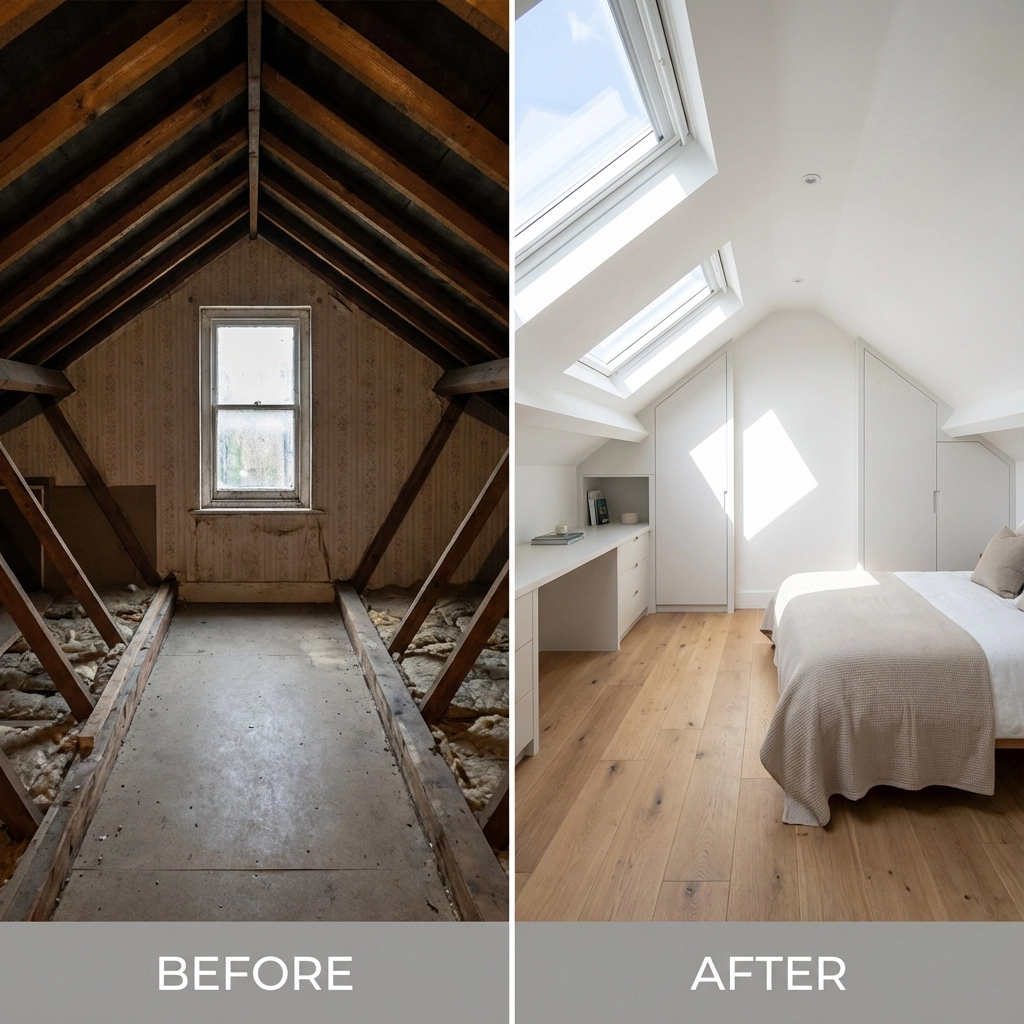
Rising property prices in Epping mean many homeowners face a difficult choice: stretch the budget for a larger home or make the most of their current space. Before you start browsing removal companies, consider this: a well-planned loft conversion in Epping can add significant living space and value to your home for a fraction of the cost of moving. With loft conversions starting from £40,000 upwards, compared to thousands in moving costs plus higher mortgage payments, converting your unused loft space makes financial sense. Here are seven practical strategies to maximise your investment and create the extra space your family needs.
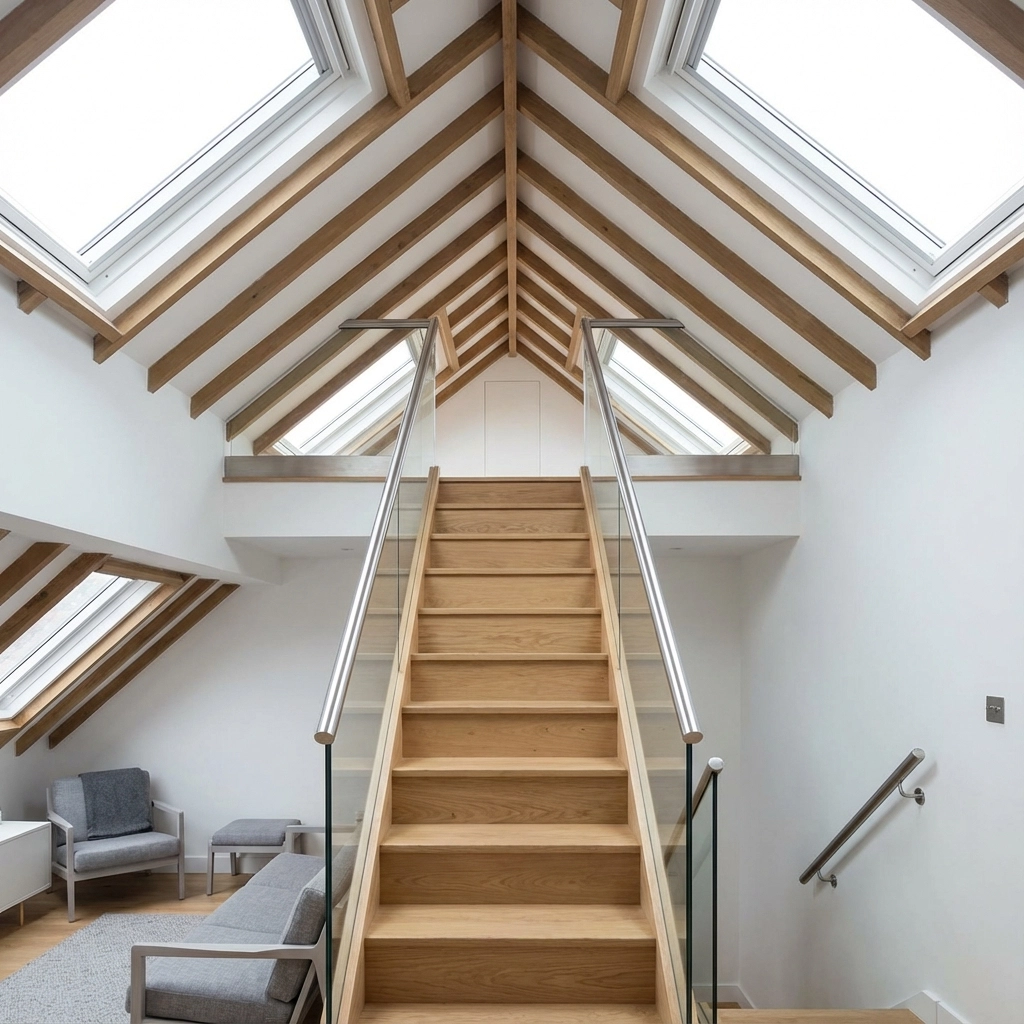
Hack 1: Plan Your Stair Placement Before Everything Else
The biggest mistake homeowners make is treating stairs as an afterthought. Building regulations require a minimum headroom of 2 metres across all points on new stairs and landings. In most Epping properties with pitched roofs, this means your stair location is largely predetermined.
Smart approach:
- Position stairs under the highest part of your roof (usually the centre)
- Avoid placing stairs near low eaves where headroom is compromised
- Consider switchback or dogleg designs over spiral stairs for better space efficiency
- Factor stair space into your floor plan from day one, not after designing rooms
Getting this right early prevents costly redesigns and ensures you maximise usable floor space in your converted loft.
Hack 2: Understand the Real Cost Breakdown
Many Epping homeowners get caught off-guard by hidden costs. A basic loft conversion starts around £40,000, while a full conversion with dormer windows typically costs £55,000 upwards. However, these figures don't tell the whole story.
Budget for these often-overlooked expenses:
- Structural surveys and engineer reports (£500-£1,500)
- Building regulations approval (£300-£500)
- Party wall agreements if applicable (£1,000-£3,000)
- Utility connections and upgrades (£2,000-£5,000)
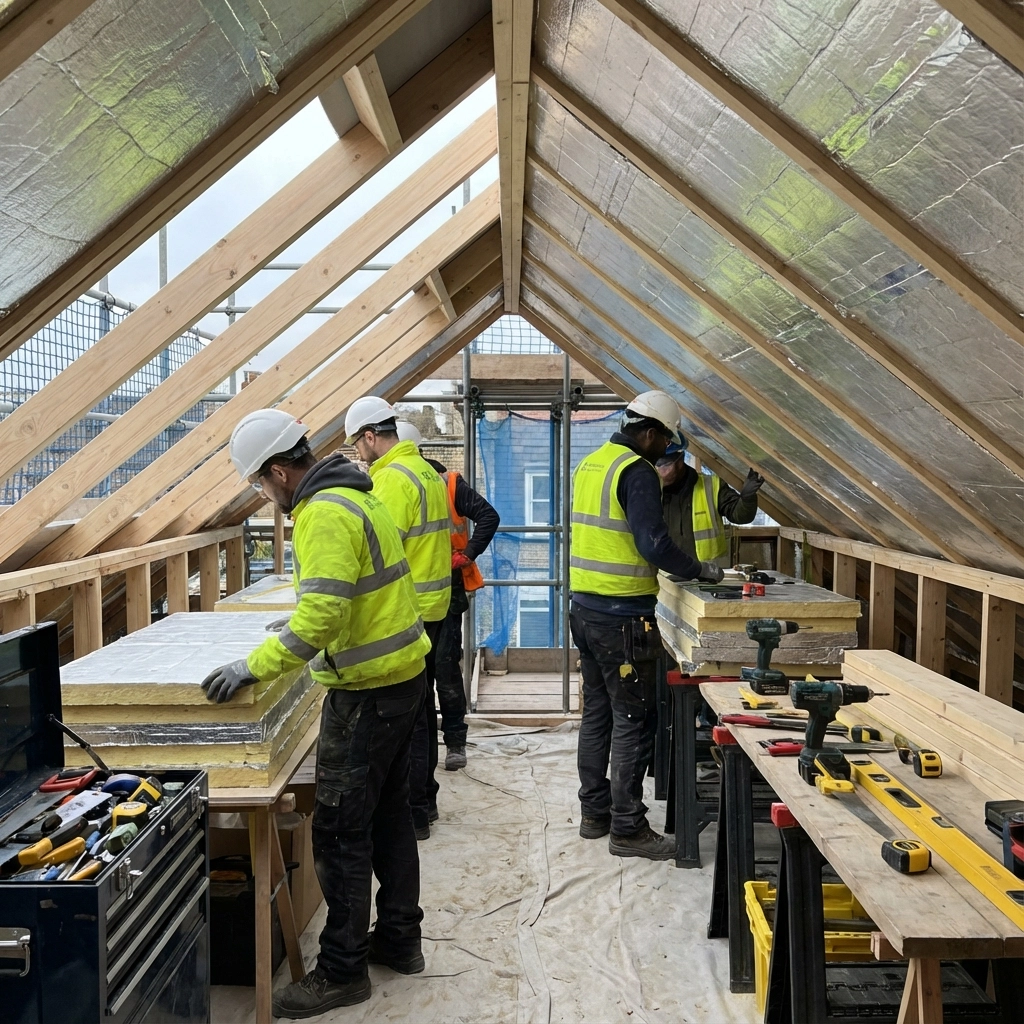
- Insulation upgrades to meet current thermal standards
- Potential floor reinforcement if existing joists are undersized
Allocating 15-20% contingency on top of your quoted price helps avoid financial stress mid-project.
Hack 3: Navigate Building Regulations Smartly
Building regulations compliance isn't optional, but understanding the requirements helps you make cost-effective choices. In Epping, like across England, your loft conversion must meet specific thermal, structural, and safety standards.
Key regulatory requirements to plan for:
- Thermal insulation achieving current U-values (expect reduced ceiling height)
- Structural adequacy (many older homes need joist reinforcement)
- Fire safety measures (usually fire doors rather than expensive sprinkler systems)
- Adequate natural light and ventilation
- Safe access via compliant staircases
Working with experienced local builders who understand these requirements prevents delays and additional costs from non-compliance issues.
Hack 4: Maximise Space Through Smart Design Choices
Every square metre counts in a loft conversion. Smart design decisions can significantly increase your usable space without increasing structural costs.
Space-maximising strategies:
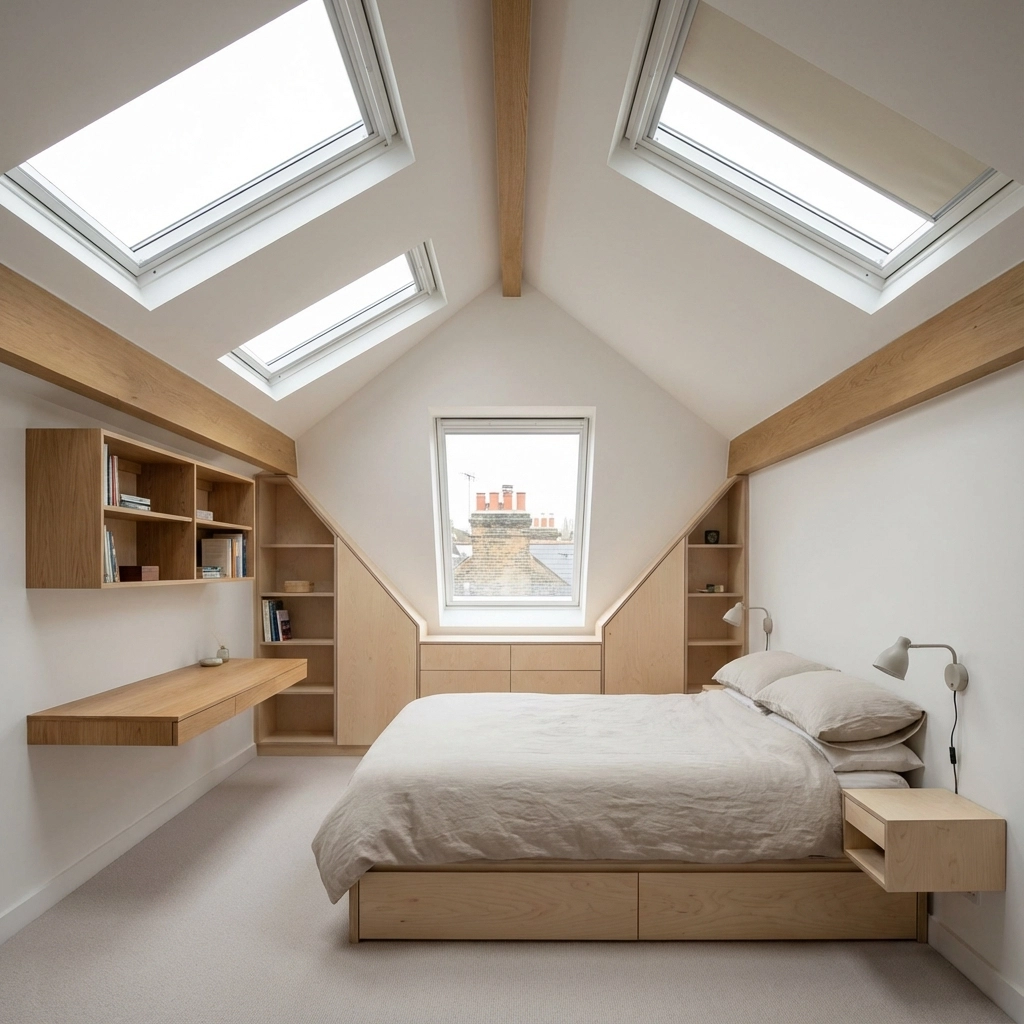
- Use the roof slope creatively with built-in storage
- Position bathrooms in areas with lower headroom (you don't need full height throughout)
- Consider roof lights instead of dormer windows where possible (cheaper and often more attractive)
- Plan electrical and plumbing routes during structural work to avoid chasing walls later
- Choose space-saving fixtures: wall-hung toilets, compact basins, sliding doors
Hack 5: Time Your Project Strategically
When you start your loft conversion in Epping can significantly impact both cost and convenience. Most homeowners don't consider seasonal factors, but timing matters.
Optimal timing considerations:
- Start planning in winter for spring/summer construction
- Avoid December/January starts due to weather delays and material price increases
- Book established contractors well in advance (quality builders are busy year-round)
- Consider school holidays if you have children (less disruption during construction)
- Factor in 8-12 weeks for a typical conversion, plus 2-4 weeks for planning and permissions
Early planning gives you more contractor options and better pricing, especially if you're flexible with start dates.
Hack 6: Choose the Right Professional Team
Not all builders understand loft conversions, and the wrong team can cost you thousands in delays, remedial work, and stress. In Epping's competitive market, it's tempting to choose based purely on price, but this often proves false economy.
What to look for in loft conversion specialists:
- Proven track record with similar projects in your area
- Understanding of local planning requirements and building regulations
- Structural engineering connections for complex projects
- Insurance and certifications appropriate for the work
- Clear, detailed quotes with specifications
- Local references you can verify
A specialist loft conversion team might cost 10-15% more than general builders, but they typically complete projects faster and with fewer complications.
Hack 7: Plan for Long-Term Value, Not Just Immediate Needs
The best loft conversion in Epping isn't just about solving today's space problems – it's about creating lasting value for your property. Think beyond immediate needs to maximise your return on investment.
Value-focused planning:
- Consider future family changes (growing children, aging parents)
- Include ensuite facilities where possible (adds significant value)
- Plan adequate storage throughout the space
- Choose neutral, timeless finishes over trendy designs
- Ensure good natural light (property buyers prioritise bright spaces)
- Include proper heating and insulation for year-round comfort
A well-designed loft conversion typically adds 15-25% to property value in Epping, often exceeding the initial investment cost.
Common Mistakes That Cost Money
Learning from others' experiences can save you thousands. These frequent mistakes catch many Epping homeowners unprepared:
Avoid these costly errors:
- Starting work before finalising all permissions and approvals
- Choosing the cheapest quote without checking credentials
- Underestimating project timescales and planning around unrealistic completion dates
- Failing to factor in furniture and finishing costs
- Not planning for temporary accommodation if needed during major work
- Skipping the structural survey to save initial costs
Making Your Decision
Converting your loft in Epping offers compelling advantages over moving house. Beyond the obvious financial savings, you maintain your established community connections, avoid the stress of property chains, and create exactly the space your family needs.
The key to a successful loft conversion lies in thorough planning, realistic budgeting, and working with experienced professionals who understand local requirements. While the initial investment might seem substantial, it's typically significantly less than the combined costs of moving, higher mortgage payments, and the disruption to family life.
Start by assessing your current property's potential, understanding the likely costs, and consulting with loft conversion specialists who can advise on the best approach for your specific situation. With careful planning and the right team, your unused loft space could become the solution to your space problems without the expense and upheaval of relocating.
If you're considering a loft conversion in Epping and want expert guidance on maximising your investment, WJ Construction can help you explore your options and plan the most effective approach for your home and budget.