
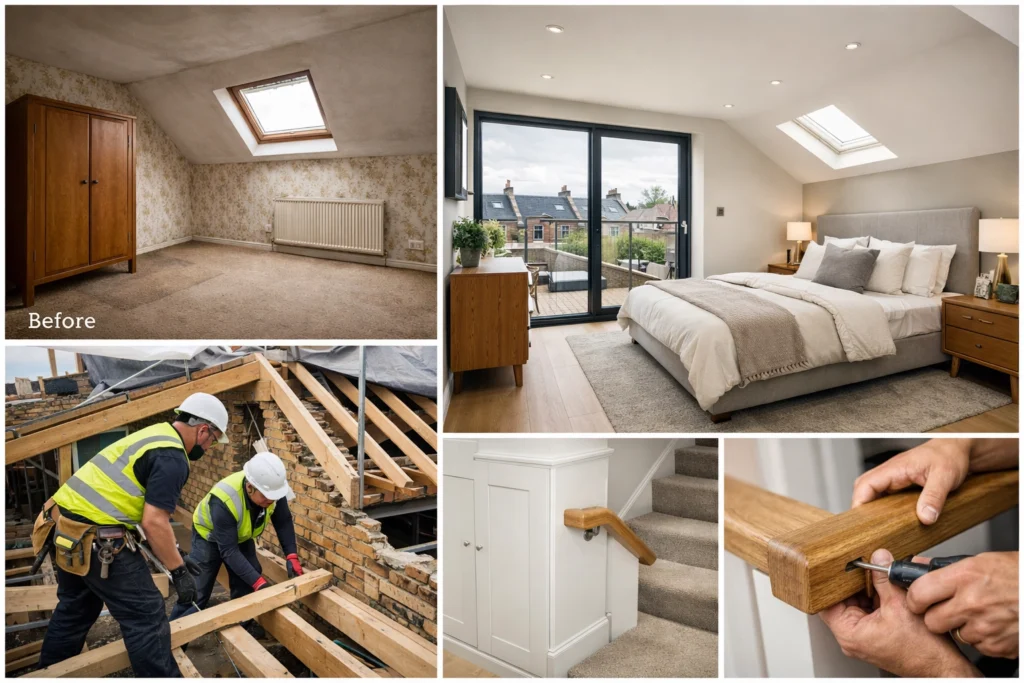
For many homeowners in Walthamstow and Chingford, the love for the local community is strong, but the physical space within their four walls often feels like it is shrinking. Whether it is a growing family, the need for a dedicated home office, or simply a desire for a master suite, the pressure to find more square footage is a common concern. In the current London property market, moving house can be a prohibitively expensive and stressful ordeal. However, the solution often lies right above your head. This guide explores the potential of loft conversions in Walthamstow, offering a practical roadmap for beginners looking to transform their unused attic into a high-value living space.
The Potential of the Space Above Your Head
Walthamstow is famous for its diverse architecture, ranging from classic Victorian and Edwardian terraces to 1930s semi-detached homes. Many of these properties possess expansive loft spaces that currently serve as nothing more than storage for suitcases and old Christmas decorations. By converting this space, you are not just adding a room; you are fundamentally changing the way you live in your home.
A well-executed loft conversion can add significant market value to your property: often between 20% and 25%. Beyond the financial gain, it allows you to remain in the area you love, close to the Village, the Marshes, or the excellent local schools, while gaining the functionality of a much larger house. As experienced walthamstow builders, we have seen first-hand how a conversion can breathe new life into a property that a family thought they had outgrown.
Choosing the Right Type of Loft Conversion
Not every loft is the same, and the type of conversion you choose will depend on your property style, your budget, and the amount of head height currently available. Here are the most common options found throughout East London:
1. Velux (Roof Light) Conversions
This is often the most cost-effective and least disruptive option. It involves installing windows into the existing slope of the roof without altering the roofline itself. This is ideal if you already have plenty of headroom and are looking to create a bright home office or a guest bedroom.
2. Dormer Loft Conversions
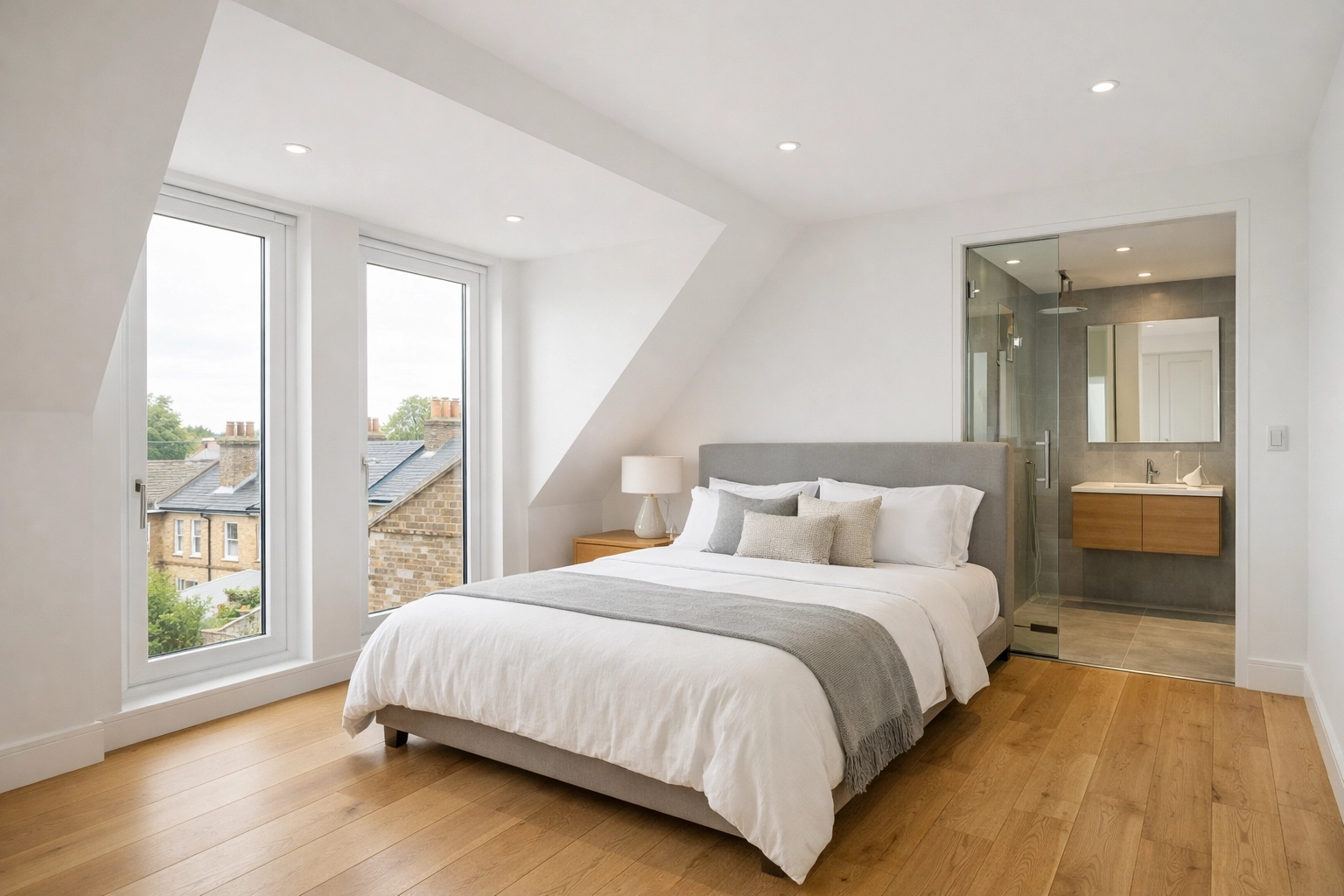
The Dormer is the most popular choice for loft conversions in Walthamstow. A dormer is an extension that projects vertically from a sloping roof. It creates a box-like structure that provides a significant amount of additional floor space and, crucially, full head height. This allows for more flexibility in furniture placement and often provides enough room for an en-suite bathroom.
3. Hip-to-Gable Conversions
Many semi-detached houses in the Chingford and Walthamstow area have a "hipped" roof, which slopes on three sides. A hip-to-gable conversion extends the sloping side of the roof outwards to create a vertical "gable" wall. This massively increases the internal volume of the loft and is often combined with a rear dormer for maximum impact.
4. L-Shaped Conversions
Frequently seen on Victorian and Edwardian terraced properties with a rear "outrigger" (the part of the house that projects into the garden), an L-shaped conversion connects two dormer builds. One sits on the main roof, and the other sits on the rear extension. This often provides enough space for two additional bedrooms and a bathroom, effectively creating a whole new floor.
Planning Permission in Waltham Forest and Chingford
One of the biggest anxieties for homeowners is the legal aspect of building. Fortunately, many loft conversions fall under "Permitted Development" (PD). This means you may not need full planning permission, provided your project meets specific criteria regarding volume, height, and materials.
However, Walthamstow has several conservation areas where PD rights may be restricted. Additionally, if you live in a flat or a maisonette, PD rights do not apply, and you will almost certainly require planning permission.
As chingford builders with deep local knowledge, we always recommend obtaining a Lawful Development Certificate. This is a legal document from the council confirming that your build was lawful and did not require planning permission, which is essential when you eventually come to sell your home. For more detailed advice, you can read our guide on planning permission secrets.
The Step-by-Step Process
A loft conversion is a significant structural undertaking, but it is highly manageable when broken down into clear stages.
Stage 1: Initial Survey and Feasibility
The first step is a professional assessment of your roof space. We measure the "ridge height": the distance from the floor joists to the highest point of the roof. Generally, you need a minimum of 2.2 metres to make a conversion viable. We also look at the pitch of the roof and the location of water tanks or chimney breasts.
Stage 2: Design and Architectural Drawings
Once feasibility is confirmed, architects will create detailed plans. This is where you decide on the layout, the position of the new staircase (which usually goes above the existing one), and where to place windows to maximise natural light.
Stage 3: Structural Calculations and Regulations
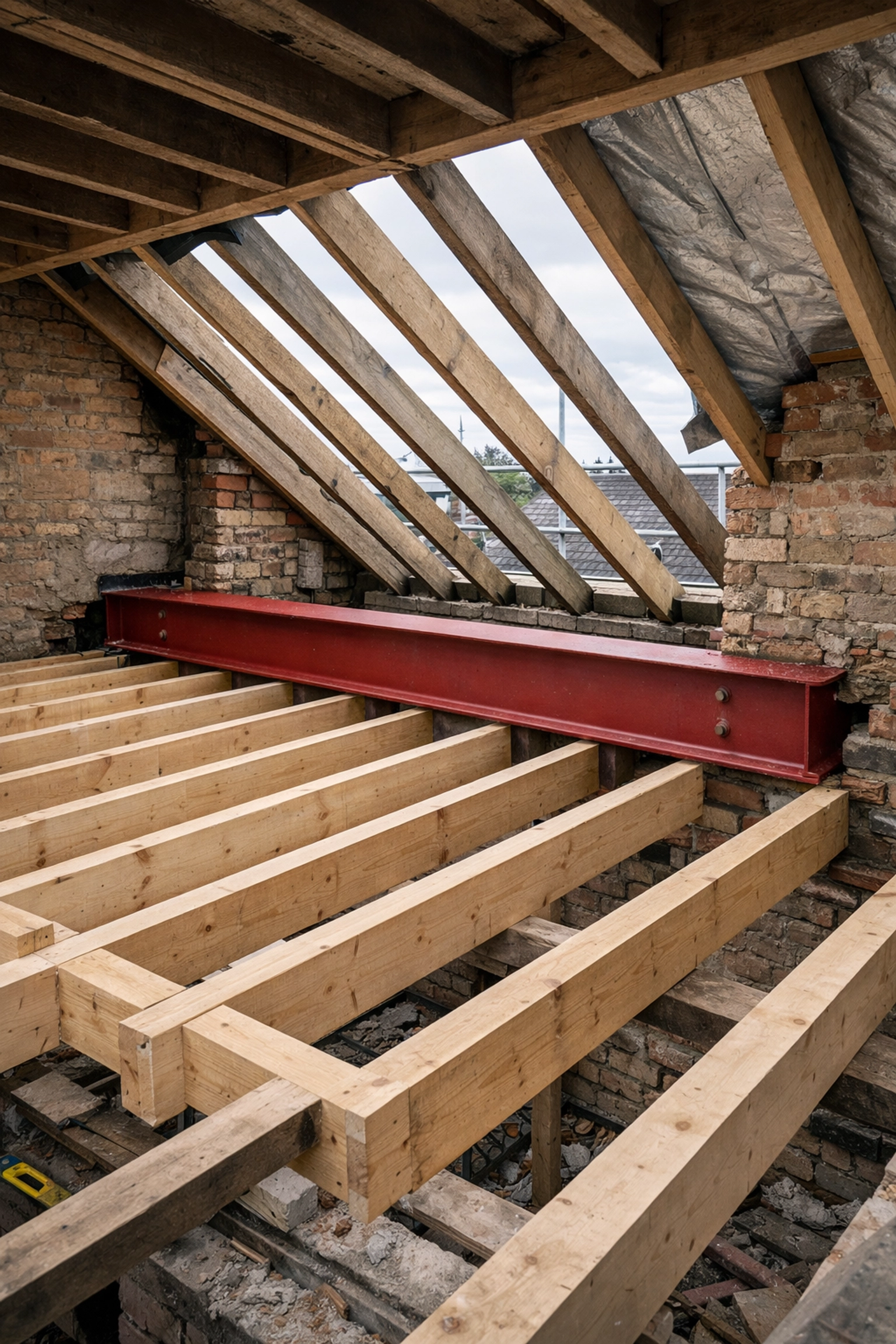
Before a single brick is moved, a structural engineer must calculate the requirements for steel beams. These beams will support the new floor and the modified roof structure. All loft conversions must also comply with Building Regulations, covering fire safety, insulation, and ventilation.
Stage 4: The Build Phase
Construction typically begins from the outside. Scaffolding is erected, and the roof is opened up. This minimizes disruption, as materials and workmen often enter through the roof rather than through your front door. The steel beams are installed, followed by the floor joists, internal stud walls, and the staircase.
Stage 5: "First Fix" and "Second Fix"
First fix involves the hidden elements: plumbing for bathrooms and wiring for electrics. Second fix follows once the walls are plastered, involving the installation of radiators, light fittings, and bathroom suites.
Typical Costs and Timelines
Transparency regarding budget is vital for a stress-free project. In the Walthamstow and Chingford area, a standard dormer loft conversion typically starts from approximately £40,000, while more complex L-shaped conversions can reach £60,000 or more.
Factors that influence the cost include:
- The type of conversion: Velux is the cheapest; L-shaped is the most expensive.
- The internal finish: High-end bathroom fixtures or bespoke fitted wardrobes will increase the budget.
- Structural requirements: Moving water tanks or chimney breasts adds to the labour and material costs.
You can find a deeper dive into these figures in our article on loft conversion costs in Walthamstow.
In terms of timeline, most conversions are completed within 10 to 15 weeks. The first few weeks involve the heavy structural work, while the final weeks focus on the internal "finer" details and finishes.
Common Mistakes to Avoid
Through our years of experience at WJ Construction Ltd, we have identified several common pitfalls that homeowners should be aware of:
- Sacrificing Too Much of the First Floor: The new staircase needs to go somewhere. Make sure your design doesn't turn an existing large bedroom into a tiny, unusable box room just to gain the loft space.
- Ignoring the Party Wall Act: If you live in a terraced or semi-detached house, you will likely need a Party Wall Agreement with your neighbours. This is a legal requirement if you are inserting steel beams into a shared wall.
- Cutting Corners on Insulation: A loft can become very hot in the summer and very cold in the winter if not insulated correctly. High-quality insulation is non-negotiable for a comfortable living space.
- Choosing the Wrong Builder: It is tempting to go for the lowest quote, but a loft conversion is a major structural change. Ensure your builder has local experience and a solid understanding of London property types.
Why Experience in Walthamstow Matters
Every area in London has its own quirks. In Walthamstow, many properties are over a century old. This means we often encounter lath and plaster walls, shallow foundations, or complex roof structures that require a sensitive touch. Working with a team that understands design and build in East London ensures that these challenges are anticipated rather than discovered as expensive surprises mid-build.
We pride ourselves on being more than just contractors; we are partners in your home's transformation. From the initial sketch to the final coat of paint, our goal is to make the process as clear and predictable as possible.
Conclusion
A loft conversion is one of the most rewarding home improvement projects you can undertake. It solves the problem of space, adds significant value, and avoids the upheaval of moving house. By understanding the types of conversions available, the planning requirements in Waltham Forest, and the realistic costs involved, you can move forward with confidence.
If you are planning a similar project in London, WJ Construction Ltd can advise on the best approach for your specific property type. We invite you to contact us to discuss your ideas and take the first step toward mastering your home's true potential.