
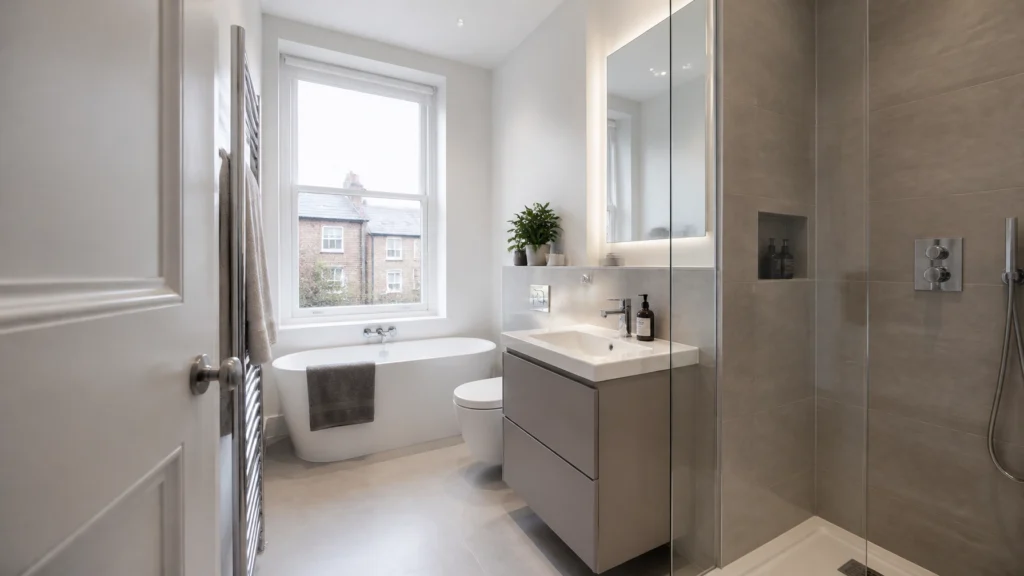
If you are considering a bathroom conversion in London, you are likely looking for a way to add value to your home and improve your daily quality of life without the upheaval of moving. In many East London properties, from Victorian terraces in Walthamstow to modern homes in Harlow, the bathroom is often the room that feels most dated or poorly utilised. However, planning a successful conversion involves more than just picking out a new suite. It requires a clear understanding of plumbing constraints, building regulations, and realistic budgeting. This guide explains the essential steps to ensure your project runs smoothly from the first tile to the final inspection.
Why Planning is the Foundation of Success
At WJ Construction Ltd, we have over 20 years of experience delivering full house refurbishments and bespoke conversions across East London. One thing we have learned is that the most successful projects are those where the homeowner has a clear plan before the first hammer is swung.
In a dense urban environment like London, space is at a premium. Whether you are adding a new ensuite as part of a loft conversion in Walthamstow or renovating a family bathroom in Chingford, your plan must balance your aesthetic desires with the practical realities of your home’s architecture.
Setting a Realistic Budget for 2026
The cost of a bathroom conversion in London can vary significantly based on the level of finish and whether you are changing the layout. For 2026, homeowners should expect the following general price ranges in the London area:
- Basic Refresh: Retaining the existing layout and using mid-range fixtures typically costs between £5,000 and £9,000.
- Standard Renovation: A full strip-out with new tiling, lighting, and high-quality fixtures usually falls between £9,000 and £15,000.
- Luxury Conversion: Projects involving structural changes, high-end materials like natural stone, and bespoke storage can exceed £20,000.
It is vital to include a contingency fund of 10-15% in your budget. In older London properties, it is common to discover hidden issues such as corroded pipework or rotten floor joists once the old suite is removed.

Designing the Layout: Same vs. New
One of the biggest decisions you will make is whether to keep your existing layout or start from scratch.
Retaining the Layout
Keeping your toilet, basin, and shower in their current positions is the most cost-effective approach. It minimises the need for new drainage and pipework, which are often the most labour-intensive parts of the job.
Changing the Layout
If your current bathroom feels cramped or illogical, moving fixtures can transform the space. However, in a London terraced house, moving a toilet can be complex because of the position of the soil stack. Our team always assesses the structural and plumbing feasibility before any layout changes are finalised to ensure the new design is functional and compliant with drainage standards.
Understanding Building Regulations in London
Even if you do not need planning permission for an internal bathroom renovation, your project must comply with UK Building Regulations. This is non-negotiable for safety and for the future sale of your property.
- Part P (Electrical Safety): Bathrooms are considered “special locations” for electrics. Any new wiring, lighting, or extractor fans must be installed by a qualified electrician who can provide a Part P certificate.
- Part G (Sanitation and Water): This ensures your hot water is safe and that your plumbing is efficient.
- Part H (Drainage): Crucial for new bathrooms, ensuring that waste is correctly disposed of without causing smells or blockages.
- Part L (Energy Efficiency): Covers the insulation of any new pipework and the efficiency of heating systems, including underfloor heating.
At WJ Construction, our accredited workforce holds the necessary qualifications to ensure all work meets these stringent standards, providing you with peace of mind and the correct certification upon completion.

Vital Considerations: Ventilation and Lighting
In the often-damp climate of the UK, ventilation is the most overlooked part of bathroom planning. Without adequate extraction, even the most expensive bathroom will succumb to mould and condensation issues within a few years.
Ventilation
A high-quality, humidity-controlled extractor fan is essential, particularly in London homes where windows may be small or non-existent in internal bathrooms. We recommend fans that continue to run until the humidity in the room drops to a safe level.
Lighting
Layered lighting can make a small bathroom feel much larger. Consider:
- Task Lighting: Bright, clear lights around the mirror for shaving or applying makeup.
- Ambient Lighting: Dimmable ceiling spotlights for a more relaxing atmosphere.
- Feature Lighting: LED strips under vanity units or in alcoves to add a modern, high-end feel.
Common Mistakes to Avoid
Through our decades of experience, we have seen several common pitfalls that homeowners can avoid with a bit of foresight:
- Choosing Style Over Function: Beautiful tiles are great, but if they are too slippery for a family bathroom, they can be a hazard. Always check the R-rating (slip resistance) of floor tiles.
- Skimping on Storage: A minimalist look is popular, but you still need somewhere for towels and toiletries. Wall-hung vanity units are a great way to add storage while keeping the floor visible, which makes the room feel larger.
- Ignoring the Water Pressure: Before buying a high-end rain shower, ensure your boiler and water pressure can handle it. You may need to install a pump or upgrade to an unvented cylinder system.

Choosing the Right Contractor
A bathroom conversion is a significant investment, and choosing the right building contractor is critical. In East London, where access can be tight and parking is often a challenge, you need a team that understands local logistics.
When vetting contractors, always ask:
- Are you insured? (WJ Construction carries full public liability insurance).
- Can you provide references from local projects?
- Will you handle the Building Regulations sign-off?
- What is the projected timeline? (A standard renovation usually takes 2-3 weeks).
Summary and Next Steps
Planning a bathroom conversion requires a balance of budget, design, and technical compliance. By focusing on a realistic budget, a functional layout, and ensuring all work meets Building Regulations, you can create a space that is both beautiful and durable.
Whether you are looking to modernise an existing room or create a brand-new space as part of a house extension, the right approach can make all the difference.
If you’re planning a similar project in London, WJ Construction can advise on the best approach. Get in touch to discuss your plans and next steps.
{“@type”:”BlogPosting”,”image”:”https://cdn.marblism.com/Ks_6zIUpblE.webp”,”author”:{“name”:”WJ Construction Ltd”,”@type”:”Organization”},”@context”:”https://schema.org”,”headline”:”The Ultimate Bathroom Planning Guide: How to Get Your Conversion Right First Time”,”publisher”:{“logo”:{“url”:”https://www.wjconstructionltd.co.uk/wp-content/uploads/2023/04/WJ-Construction-Logo.png”,”@type”:”ImageObject”},”name”:”WJ Construction Ltd”,”@type”:”Organization”},”description”:”A comprehensive guide for London homeowners on planning a bathroom conversion, covering costs, building regulations, and design tips.”,”datePublished”:”2026-05-20″,”mainEntityOfPage”:{“@id”:”https://www.wjconstructionltd.co.uk/blog/ultimate-bathroom-planning-guide”,”@type”:”WebPage”}}