
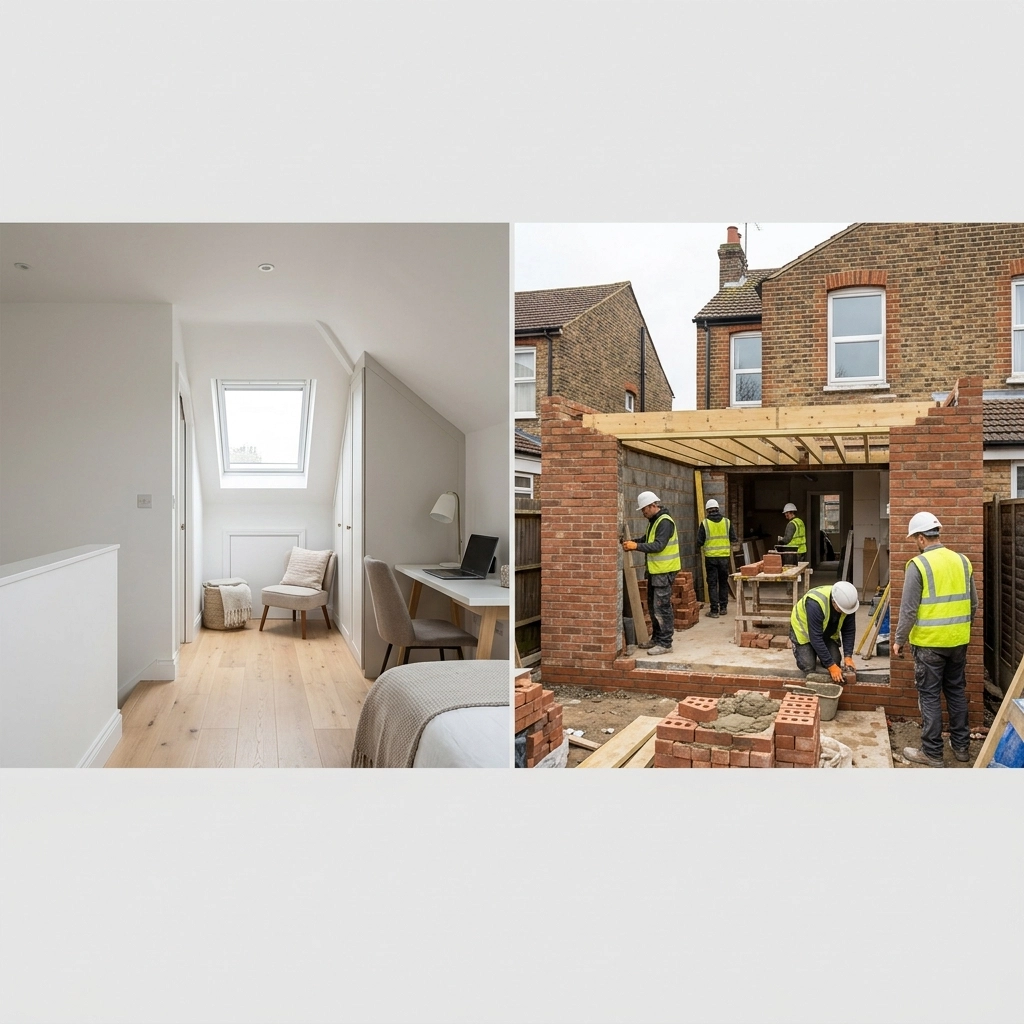
For many homeowners in Chingford and the surrounding East London areas, the need for more space eventually becomes a pressing priority. Whether it is a growing family, the need for a dedicated home office, or the desire for a larger, social kitchen-diner, the dilemma is almost always the same: should you move to a larger property or improve the one you already have? In the current property market, where stamp duty, estate agent fees, and moving costs can easily climb into the tens of thousands, extending your existing home is often the most financially sound decision.
The two most popular ways to add significant square footage are loft conversions and house extensions. Both offer the opportunity to transform your living experience, but they serve different purposes and come with unique considerations regarding cost, timeline, and planning. At WJ Construction Ltd, with over 20 years of trade experience, we have helped countless clients across East London, Epping, and Chingford navigate this choice. This guide will help you determine which option is better suited for your specific needs and your property.
Determining Your Goals: What Kind of Space Do You Need?
The first question any homeowner should ask is not "how much will it cost?" but "how will I use the space?" The functionality of a loft conversion is fundamentally different from that of a ground-floor extension.
When to Choose a Loft Conversion
A loft conversion is typically the go-to solution for adding "private" spaces. Because the new rooms are situated at the top of the house, they offer a sense of separation from the main living areas. This makes them ideal for:
- A master bedroom suite with an ensuite bathroom.
- A quiet, secluded home office.
- A guest bedroom or a teenager’s retreat.
If your primary goal is to add a bedroom to increase your home’s value or accommodate a growing family, a loft conversion is often the most efficient route. For those looking for a loft conversion in Epping or Chingford, the local architecture: often semi-detached or Victorian terrace: lends itself perfectly to dormer or hip-to-gable designs.
When to Choose a House Extension
In contrast, building extensions in London are usually about "social" spaces. If your kitchen feels cramped or you lack a connection to your garden, a rear or side-return extension is the superior choice. These projects are best for:
- Creating large, open-plan kitchen and dining areas.
- Adding a secondary lounge or playroom.
- Improving the "flow" of the ground floor and increasing natural light.
Cost and Value: Which Offers the Best Return?
Budget is a major factor in any home improvement project. Generally speaking, loft conversions are more cost-effective per square metre than extensions. This is because the "envelope" of the building (the roof and walls) already exists, whereas an extension requires significant groundworks, foundations, and new external walls.
Typical Costs to Expect
While every project is unique, based on current 2026 data, you can expect the following:
- Loft Conversions: Typically range from £1,500 to £2,500 per m².
- House Extensions: Typically range from £2,000 to £3,500 per m².
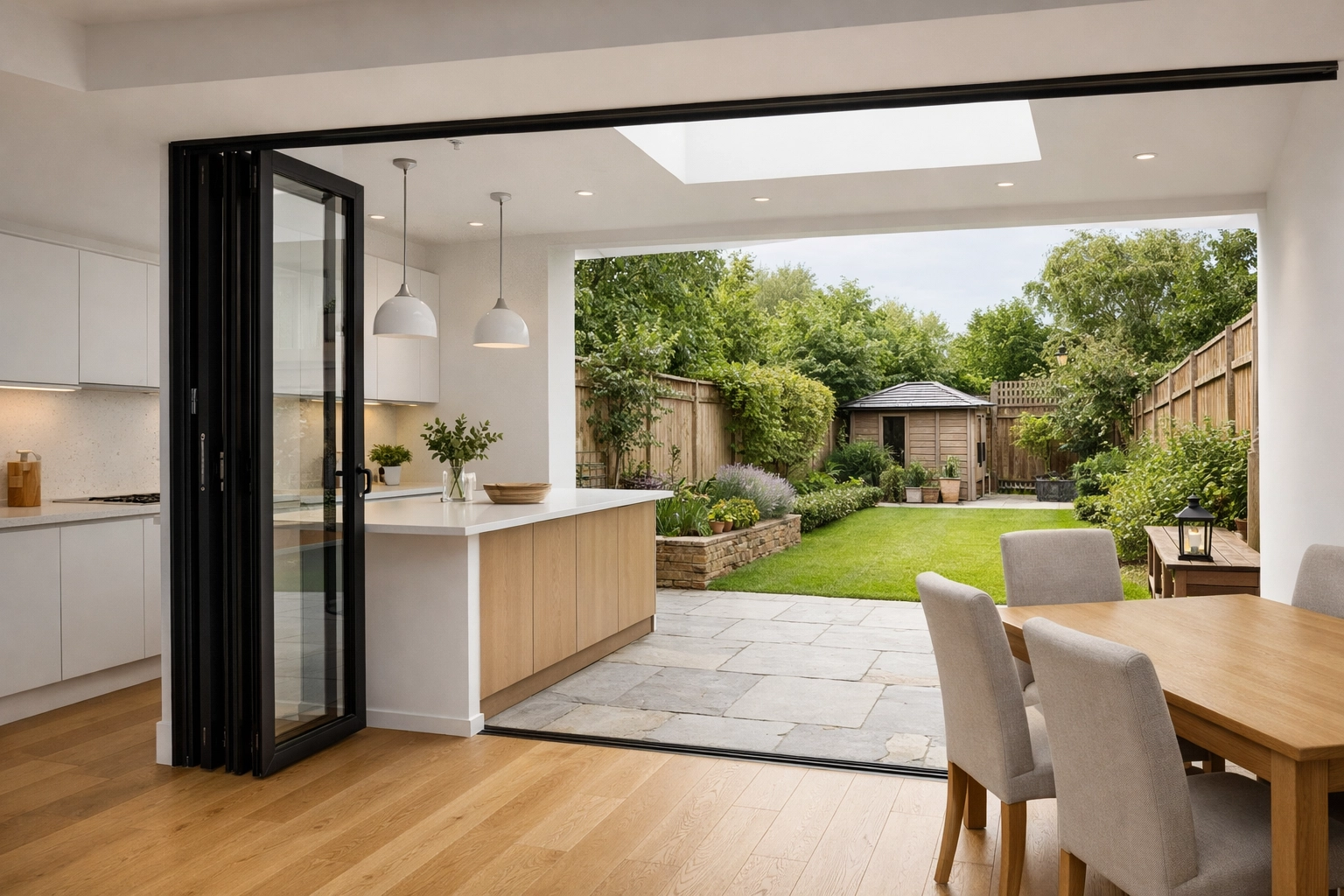
It is important to remember that extensions often involve expensive internal modifications, such as moving a kitchen or installing large sets of bi-fold doors, which can drive up the total project cost. For a more detailed breakdown of ground-floor project costs, you may find our guide on kitchen extension costs in East London useful.
Adding Value to Your Chingford Property
Both options typically add around 20% to the headline value of a property. However, in high-demand areas like East London, a loft conversion can sometimes offer a slightly better net return. This is because you are gaining a valuable extra bedroom without sacrificing any of your garden: a premium commodity in London. For homeowners in nearby areas, we often discuss how Loughton loft conversions can be a smarter investment than moving.
Timeline and Disruption: Living Through the Build
One of the biggest anxieties for homeowners is the level of disruption to daily life. As experienced Chingford builders, we always provide a realistic outlook on how a project will affect your home.
The Loft Conversion Timeline
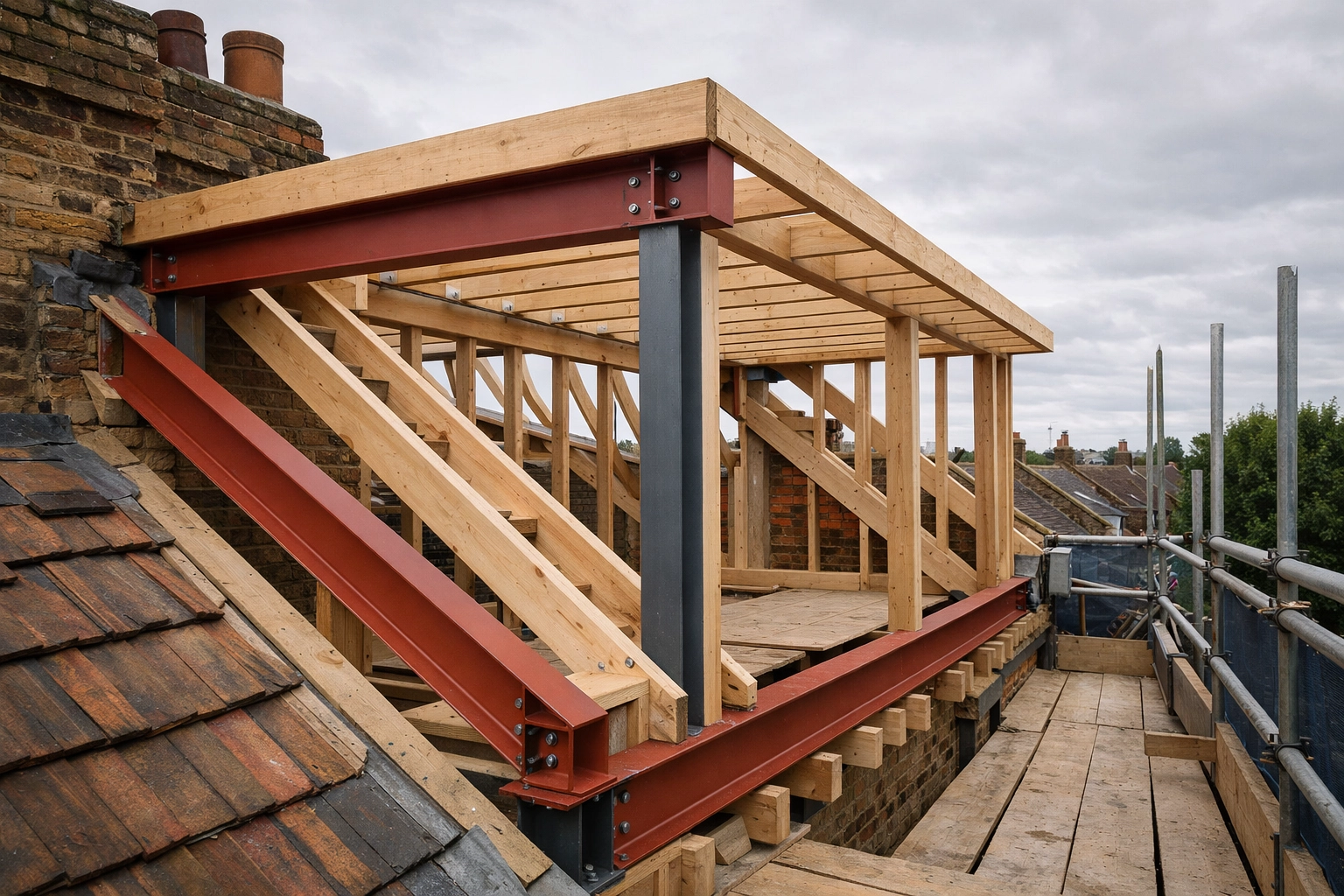
Loft conversions are remarkably "non-invasive" for much of the build. Most of the work, including the structural steel installation and roofing, is carried out via external scaffolding. Builders only need to enter the main house toward the end of the project to install the new staircase and finish the internal details.
- Duration: 6 to 10 weeks.
- Disruption Level: Low to Moderate.
The Extension Timeline
A house extension involves heavy machinery, excavations, and often the removal of rear walls. This means more dust, more noise, and more time where the back of your house may be exposed to the elements.
- Duration: 3 to 6 months.
- Disruption Level: Moderate to High (especially if the kitchen is being replaced).
Working with an expert design and build East London team can help mitigate these stresses. Our workforce is fully accredited with CSCS cards and City & Guilds qualifications, ensuring that every phase of the build is managed professionally and safely.
Planning Permission and Structural Suitability
Not every house is suitable for every type of expansion. Before you fall in love with a design, you must consider the physical and legal constraints of your property.
Checking Your Roof Height
For a loft conversion, the most critical factor is the internal head height. You generally need a minimum of 2.2 metres from the top of the ceiling joists to the bottom of the ridge timber. If your loft is shallower than this, you may need to consider lowering the ceilings on the floor below, which significantly increases the cost and complexity.
Garden Space and Foundations
For an extension, the main constraint is your outdoor space. While a rear extension can transform your living room, it will eat into your garden. You must also consider the proximity of neighbouring boundaries and the location of underground drains or sewers, which may require a "Build Over Agreement" with the local water authority.
Planning Rules in East London
Many loft conversions and small rear extensions fall under "Permitted Development" (PD), meaning you don't need full planning permission as long as you stay within certain limits. However, if you live in a conservation area or a listed building: common in parts of Walthamstow and Epping: the rules are stricter. We always recommend checking the specific requirements for loft conversions in Walthamstow or your local borough before starting.
Key Considerations: A Quick Comparison Checklist
To help you decide, consider the following points:
- Need for Bedrooms: If you need more sleeping space, a loft conversion is usually the winner.
- Need for Living Space: If you want a bigger kitchen or a better connection to the outdoors, an extension is the way forward.
- Garden Size: If your garden is small, going "up" into the loft preserves your outdoor area.
- Budget: Lofts are generally more affordable and provide a faster return on investment.
- Structural Integrity: Does your home have the foundation strength for an extension, or the roof height for a loft?
Why Professional Expertise Matters
Whether you choose to go up or out, the success of your project depends on the quality of the workmanship. As local Walthamstow builders, WJ Construction Ltd understands the specific challenges of East London properties, from Victorian drainage systems to the structural requirements of 1930s semi-detached homes.
Our 20 years of experience mean we don't just "build": we advise. We help homeowners avoid the common pitfalls that lead to budget overruns and planning delays. By choosing a team with accredited City & Guilds tradespeople, you ensure that your new space is not only beautiful but structurally sound and compliant with all building regulations.
Conclusion: Making the Right Choice for Your Home
There is no universal "better" option between a loft conversion and a house extension. The right choice depends entirely on your family’s needs, your property’s layout, and your long-term goals. If you prioritise speed, cost-effectiveness, and extra bedrooms, look to the skies. If you want to transform the heart of your home and create a modern, open-plan lifestyle, look to the garden.
By investing in your current property, you are not only gaining the space you need today but also securing the financial future of your home. Expanding your existing living space is almost always a more rewarding path than the stress and expense of moving.
If you are planning a similar project in East London, Epping, or Chingford, WJ Construction Ltd can advise on the best approach for your specific property. Get in touch to discuss your plans and take the first step toward your dream home.