
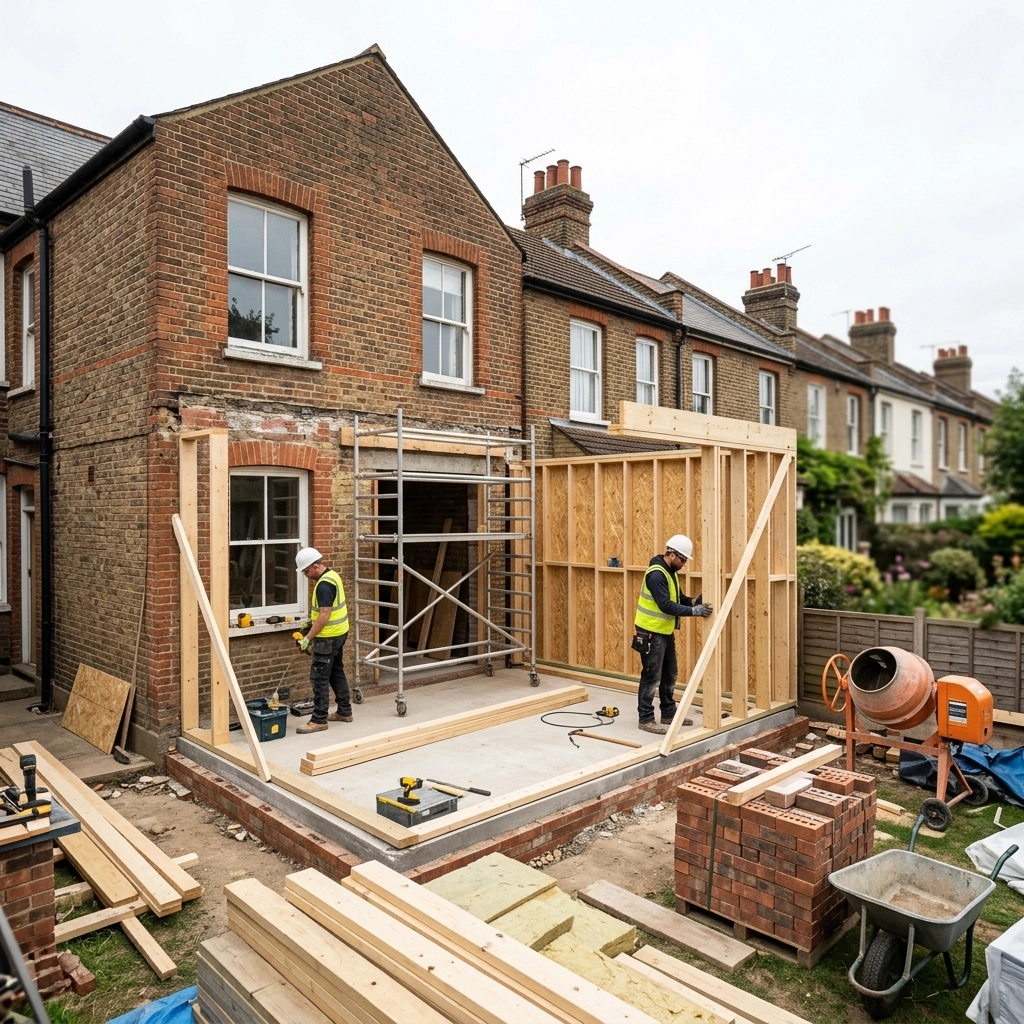
For many homeowners in East London, the love for their property is often balanced against a growing need for more space. Whether it is a expanding family, the requirement for a dedicated home office, or the desire for a modern, open-plan kitchen and dining area, the limitations of a traditional terrace or semi-detached house can become apparent over time. Moving house is a significant undertaking, often involving high costs and the stress of leaving a familiar community. This is where a well-planned rear extension becomes an attractive alternative.
In this guide, we will explore how working with experienced Chingford builders can transform your living environment. We will cover the practicalities of planning permission, typical costs, and the construction process to help you decide if a rear extension is the right choice for your East London home. At WJ Construction Ltd, with over 20 years of experience in the local area, we have seen first-hand how these projects can breathe new life into older properties while adding substantial market value.
Why a Rear Extension is the Ideal Solution for East London Homes
A rear extension is one of the most effective ways to increase the footprint of your property. Unlike a loft conversion, which adds vertical space usually reserved for bedrooms or bathrooms, a rear extension expands the ground floor. This is typically the "heart" of the home, where families spend the most time together. By extending out into the garden, you can create a seamless transition between indoor and outdoor living.
The most popular choice for homeowners today is the open-plan kitchen and diner. By removing internal walls and extending backwards, you can replace a cramped, dark kitchen with a bright, airy space featuring bi-fold doors and skylights. This not only improves the daily flow of the house but also makes the property far more attractive to future buyers. When considering your options, it is often helpful to weigh up loft conversions vs house extensions to see which better suits your lifestyle needs.
Planning Permission and Permitted Development in Chingford
One of the most common concerns for homeowners is whether they will be allowed to build. In many cases, a single-storey rear extension can be completed under "Permitted Development" (PD) rights. This means you may not need to submit a full planning application, provided the extension meets specific criteria regarding height, depth, and materials.
However, rules can be stricter in conservation areas or for listed buildings, both of which are found in parts of Chingford and the surrounding London Borough of Waltham Forest. Even if your project falls under Permitted Development, it is highly recommended to obtain a Lawful Development Certificate. This provides legal proof that your build was lawful at the time of construction, which is essential when you come to sell your home.
For larger projects, such as a double-storey extension or a significant wrap-around, full planning permission will likely be required. Working with a specialist who understands local planning nuances can save weeks of delays. You can find more detail on the initial stages of this process in our ultimate guide to building extensions in London.

Understanding Building Regulations and the Party Wall Act
While planning permission deals with the appearance and impact of your extension on the neighbourhood, Building Regulations focus on the structural integrity and safety of the build. Every extension must comply with these regulations, covering aspects such as insulation, drainage, fire safety, and ventilation.
A crucial part of the process for many Chingford residents is the Party Wall Act. If your extension involves building on or near the boundary of a neighbour’s property, or if it requires deep excavations for foundations, you are legally required to notify your neighbours. This is a common occurrence in East London’s terraced and semi-detached streets.
Navigating these legal requirements can feel daunting, but an experienced builder will guide you through the process, ensuring all notices are served correctly and structural calculations are handled by qualified engineers. This transparency is a key reason why many choose a design and build East London service, as it keeps all these moving parts under one roof.
Typical Costs to Expect for a Rear Extension
Budgeting is often the most stressful part of any home improvement project. In 2026, the cost of a rear extension in Chingford can vary significantly based on the size, the complexity of the groundworks, and the level of internal finish you choose.
As a general guide, homeowners should consider the following cost brackets:
- Small Single-Storey Extension: £35,000 – £50,000
- Medium-Sized Kitchen Extension: £55,000 – £85,000
- Large or High-Spec Extensions: £90,000+
It is important to remember that these figures usually cover the structural build and "shell." You must also factor in the cost of the new kitchen units, flooring, glazing (such as high-end bi-fold doors), and VAT. At WJ Construction Ltd, we always advise clients to hold a contingency fund of around 10% to cover any unforeseen issues that may arise once the ground is broken, such as old drainage pipes that need relocating.
The Construction Timeline: From Foundations to Finish
A standard single-storey rear extension typically takes between 12 and 16 weeks to complete, though this can vary depending on the weather and the complexity of the project. Understanding the stages can help manage the disruption to your daily life.
- Preparation and Groundworks (Weeks 1-3): This involves excavating the foundations, laying the concrete, and installing any necessary new drainage systems.
- Structural Shell (Weeks 4-7): The walls are built, and the structural steelwork is installed. This is the stage where the roof is added, making the new space "watertight."
- Breakthrough and Internal Work (Weeks 8-11): This is often the most exciting part, where the existing back wall of your house is removed to join the old and new spaces. Internal stud walls, plumbing, and electrical "first fix" take place here.
- Plastering and Finishing (Weeks 12-16): The walls are plastered, flooring is laid, and the "second fix" of electrics and plumbing is completed. Finally, the kitchen is fitted, and the space is decorated.

Common Mistakes Homeowners Should Avoid
After two decades as house extension specialists, we have identified several pitfalls that can derail a project. Being aware of these can save you a significant amount of stress and money.
- Underestimating the Budget: Always get a detailed, written quote rather than a "ballpark" figure. Ensure you know exactly what is included (and what isn't) to avoid surprises halfway through the build.
- Skipping the Professional Advice: It can be tempting to try and save money on architectural drawings or structural calculations, but these are the foundations of a safe and legal build.
- Choosing the Wrong Glazing: In a rear extension, the windows and doors are a primary feature. Opting for cheap glazing can lead to heat loss in winter and overheating in summer. Invest in high-quality thermal glass.
- Poor Communication: Establishing a clear line of communication with your project manager is vital. Regular updates ensure that any small decisions: such as the placement of plug sockets: don't become big problems later on.
Choosing the Right Chingford Builders
The success of your project hinges on the team you hire. When looking for builders in East London, it is important to look beyond just the price. You need a team with local knowledge, a proven track record, and the ability to manage the project from start to finish.
A local builder will be familiar with the soil conditions in Chingford, the local council's planning preferences, and will have established relationships with local tradespeople. With 20 years of experience serving domestic clients in East London, WJ Construction Ltd prides itself on providing a professional, reliable service that respects the fact we are working in your home. For more tips on making the right choice, see our guide on 10 things you should know before hiring Chingford builders.

Maximising Natural Light and Space
The primary goal of a rear extension is often to make a home feel larger and brighter. To achieve this, design elements such as roof lanterns and floor-to-ceiling glass are essential. Roof lanterns are particularly effective because they bring light into the centre of the house, which can otherwise become dark once the extension is added.
Consider the "internal flow" of the house. A common mistake is creating a large new room but leaving the original middle room of the house dark and unusable. By using wide openings and consistent flooring throughout the ground floor, you can ensure that the extension feels like a natural part of the home rather than an awkward "bolt-on."
Conclusion
Transforming your home with a rear extension is a significant journey, but the rewards are substantial. Not only do you gain the functional space your family needs, but you also create a modern living environment that can completely change how you interact with your home and garden. By understanding the costs, planning requirements, and construction stages, you can approach your project with confidence.
At WJ Construction Ltd, we understand the anxieties that come with major building works. Our goal is to provide clarity and professional expertise to homeowners across East London, ensuring every project is finished to the highest standard.
If you’re planning a similar project in London, WJ Construction can advise on the best approach. Get in touch to discuss your plans and next steps.