
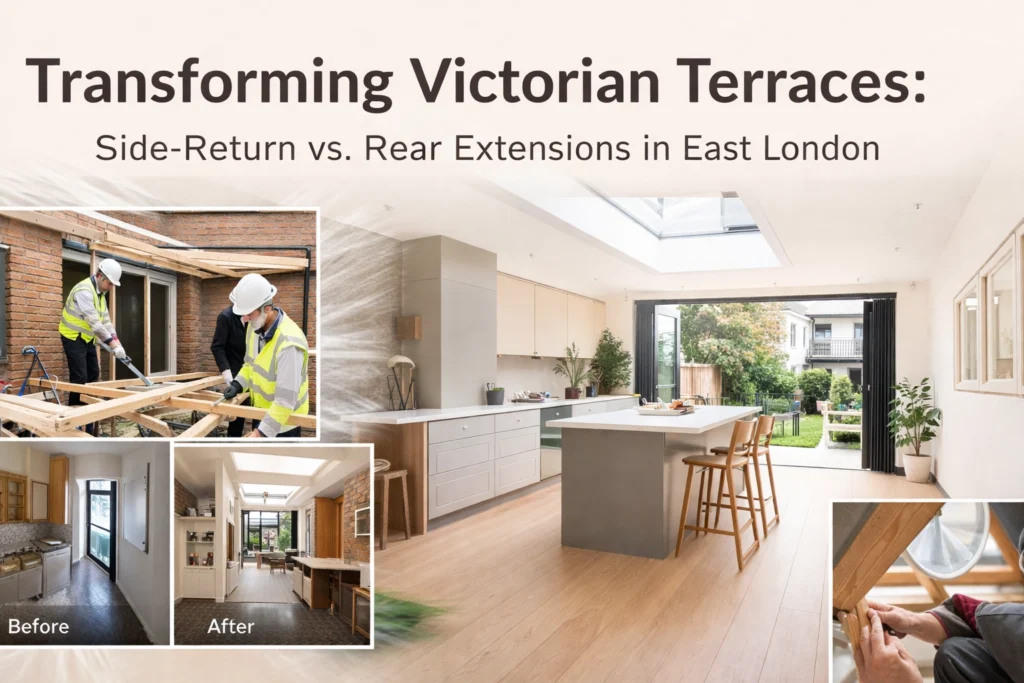
If you own a Victorian or Edwardian terrace in East London, you have likely noticed that awkward strip of space running alongside your kitchen. It is narrow, often shaded, and rarely used for anything more than storing bins. The good news is that this underutilised area holds serious potential.
When it comes to extending your home, you essentially have two main options: a side-return extension or a rear extension. Both can transform your living space, but they serve different purposes and come with different considerations. This guide will help you understand which approach suits your property, your budget, and your lifestyle.
Understanding the Layout of a Victorian Terrace
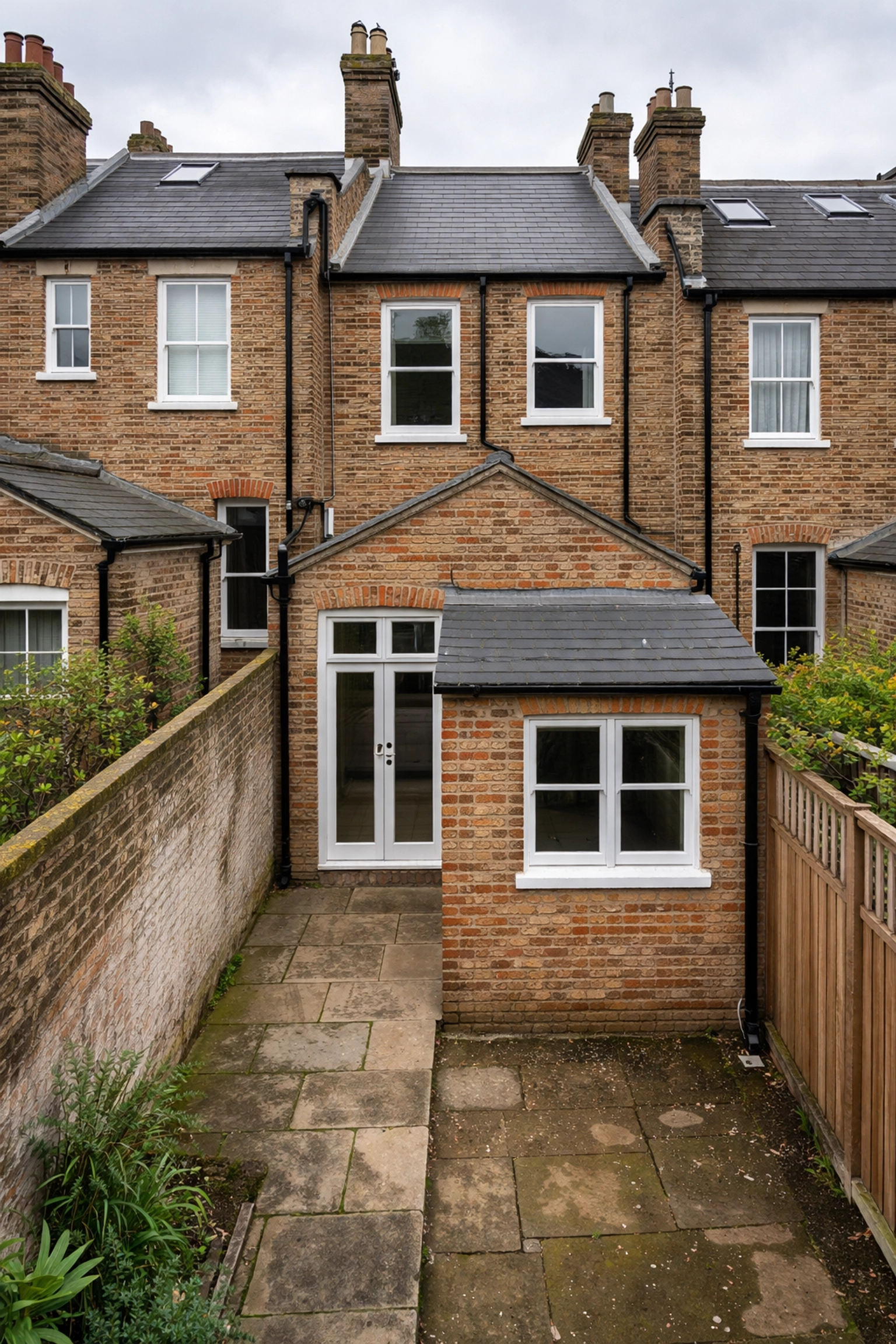
Victorian and Edwardian terraces follow a distinctive layout that you will recognise across Walthamstow, Chingford, and Epping. The original kitchen sits at the back of the house, usually in an outrigger: a smaller, narrower section that projects into the garden.
Next to this outrigger is the side return: a passage of dead space between your kitchen wall and the boundary with your neighbour. In most East London terraces, this strip is around 1 to 1.5 metres wide.
The result? A dark, cramped kitchen that feels disconnected from your garden. Both side-return and rear extensions address this problem, but in different ways.
What is a Side-Return Extension?
A side-return extension fills in that narrow strip of wasted space beside your kitchen. Rather than extending further into your garden, you are building outwards into the gap.
Benefits of a Side-Return Extension
-
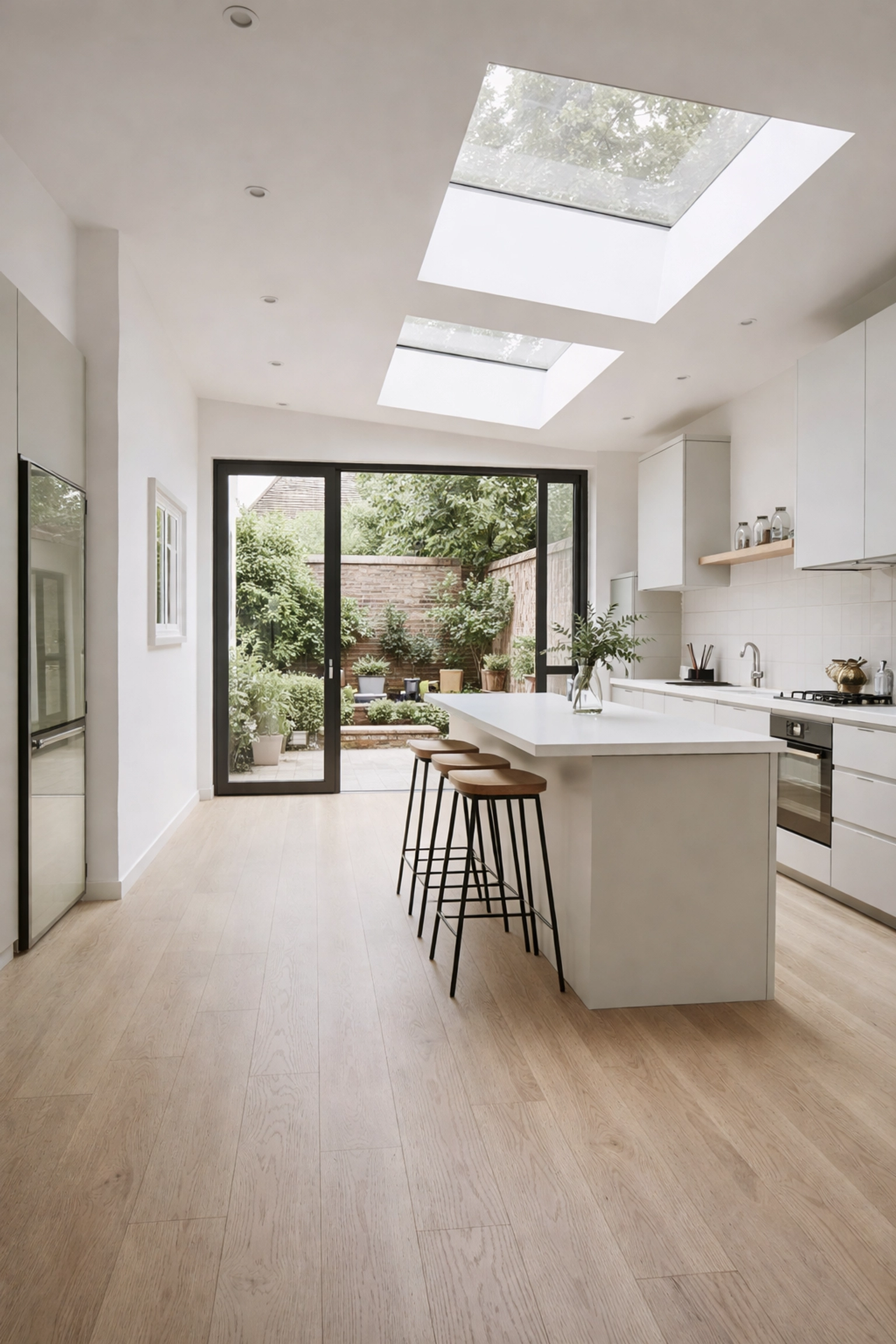
Maximises natural light: By incorporating large glazed panels or roof lights, a side-return extension can flood your kitchen with daylight. Many East London homeowners describe the transformation from a cold, dark kitchen to a bright, open space.
-
Minimal garden impact: Because you are building into the side passage rather than the garden, you retain most of your outdoor space. This is particularly valuable if you have a smaller plot.
-
Open-plan living: Side-return extensions are ideal for creating that sought-after kitchen-diner layout, connecting your cooking area to your living space.
-
Potential for permitted development: In many cases, side-return extensions in East London fall under permitted development rights, meaning you may not need full planning permission. This saves both time and application fees.
A well-designed side-return extension can increase your property value by 10% to 25% in high-demand areas like Walthamstow and Chingford.
What is a Rear Extension?
A rear extension projects directly into your garden, extending the back wall of your property. This approach gives you more flexibility in terms of size and layout.
Benefits of a Rear Extension
-
Greater floor space: If you need a significant amount of additional room: for a large kitchen, utility area, or even a ground-floor bedroom: a rear extension delivers more square meterage.
-
Design flexibility: With a rear extension, you have more options for layout, including wrap-around designs that combine both side and rear elements.
-
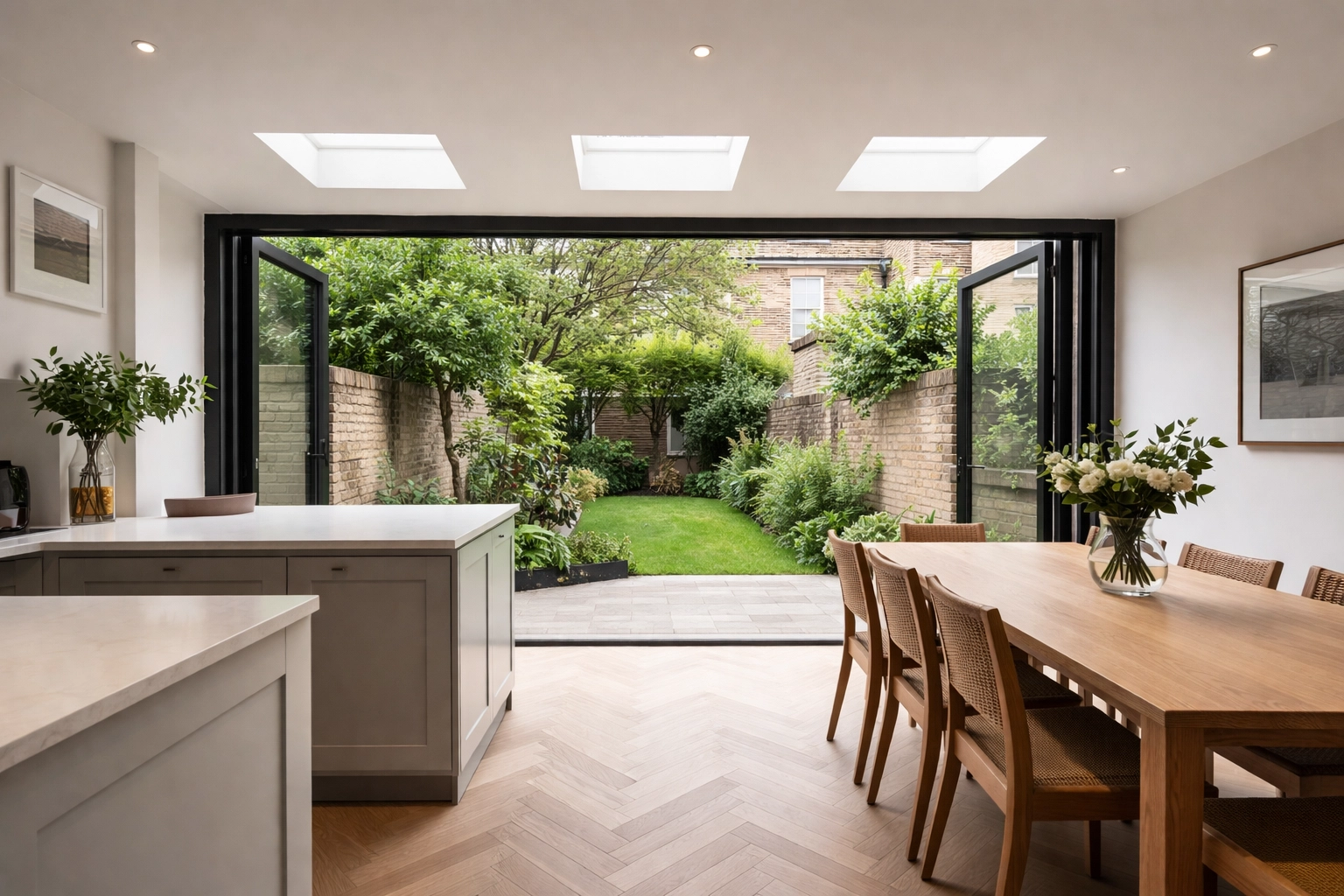
Separate zones: A larger footprint allows you to create distinct areas within the extension, such as a kitchen, dining space, and seating area.
-
Bi-fold or sliding doors: Rear extensions often feature large glass doors that open onto the garden, creating a seamless indoor-outdoor connection during warmer months.
The trade-off is that a rear extension will reduce your garden size. For properties in Epping and surrounding areas where outdoor space is a selling point, this is worth considering carefully.
Side-Return vs Rear Extension: Key Differences
| Factor | Side-Return Extension | Rear Extension |
|---|---|---|
| Space gained | Moderate (typically 10-20 sqm) | Larger (20-40+ sqm) |
| Garden impact | Minimal | Significant |
| Natural light | Excellent with roof lights | Good with rear glazing |
| Planning | Often permitted development | May require full planning |
| Cost | Generally lower | Generally higher |
| Build time | 8-12 weeks typical | 10-16 weeks typical |
For many Victorian terrace owners in East London, a side-return extension offers the best balance of improved living space without sacrificing too much garden. However, if your kitchen is already a reasonable size and you need a larger multi-functional space, a rear extension may be the better investment.
Planning Permission Considerations in East London
One of the first questions homeowners ask is whether they need planning permission. The answer depends on several factors.
Permitted Development Rights
Under permitted development, you can extend your home without a full planning application, provided you meet certain criteria:
- The extension does not exceed specific volume limits
- Materials are similar in appearance to the existing house
- The extension does not extend beyond the rear wall by more than 3 metres (for attached houses) or 4 metres (for detached houses) under standard rules
- No part of the extension is higher than 4 metres
Many side-return extensions fall within these limits. However, if your property is in a conservation area: common in parts of Walthamstow and Epping Forest District: additional restrictions apply.
When You Will Need Planning Permission
You will likely need to submit a planning application if:
- Your property is in a designated conservation area
- The extension exceeds permitted development limits
- You live in a listed building
- Your property has already used its permitted development allowance
Navigating Epping Forest District Council's planning rules can be complex. If you are unsure, it is worth getting professional advice early in the process to avoid costly delays.
For more guidance on local planning requirements, you may find our article on planning permission for projects in Epping helpful.
Typical Costs to Expect
Understanding the likely investment helps you plan realistically. Costs vary depending on specification, access, and site conditions, but here are typical ranges for East London in 2026.
Side-Return Extension Costs
- Basic specification: £35,000 to £50,000
- Mid-range specification: £50,000 to £70,000
- High-end specification: £70,000 to £100,000+
Rear Extension Costs
- Basic specification: £50,000 to £70,000
- Mid-range specification: £70,000 to £100,000
- High-end specification: £100,000 to £150,000+
These figures include construction, but you should also budget for:
- Architectural or design fees
- Structural engineer reports
- Building regulations approval
- Kitchen fitting and finishes
- Landscaping to reinstate the garden
A common mistake is underestimating the finishing costs. The shell of the extension is only part of the story: flooring, electrics, plumbing, and decoration add up quickly.
Which Option is Right for Your Home?
Choosing between a side-return and rear extension comes down to your priorities.
Consider a Side-Return Extension If:
- Your main goal is to brighten a dark kitchen
- You want to preserve your garden space
- You are working with a tighter budget
- You want to minimise disruption and build time
Consider a Rear Extension If:
- You need significantly more floor space
- You want a large open-plan kitchen-diner-living area
- Garden size is less of a concern
- You are planning a major renovation anyway
Some homeowners opt for a wrap-around extension that combines both approaches. This delivers maximum space and light but comes with a higher price tag and longer build time.
Common Mistakes to Avoid
Having worked on numerous Victorian terrace extensions across East London, certain issues come up repeatedly. Here is how to sidestep them.
Underestimating Light
Victorian kitchens are notoriously dark. If your extension design does not prioritise roof lights or large glazed sections, you may end up with a bigger space that still feels gloomy.
Ignoring the Flow
Think about how you will move through the space. An extension that blocks natural routes between kitchen, dining, and garden will feel awkward to live in.
Skipping Structural Surveys
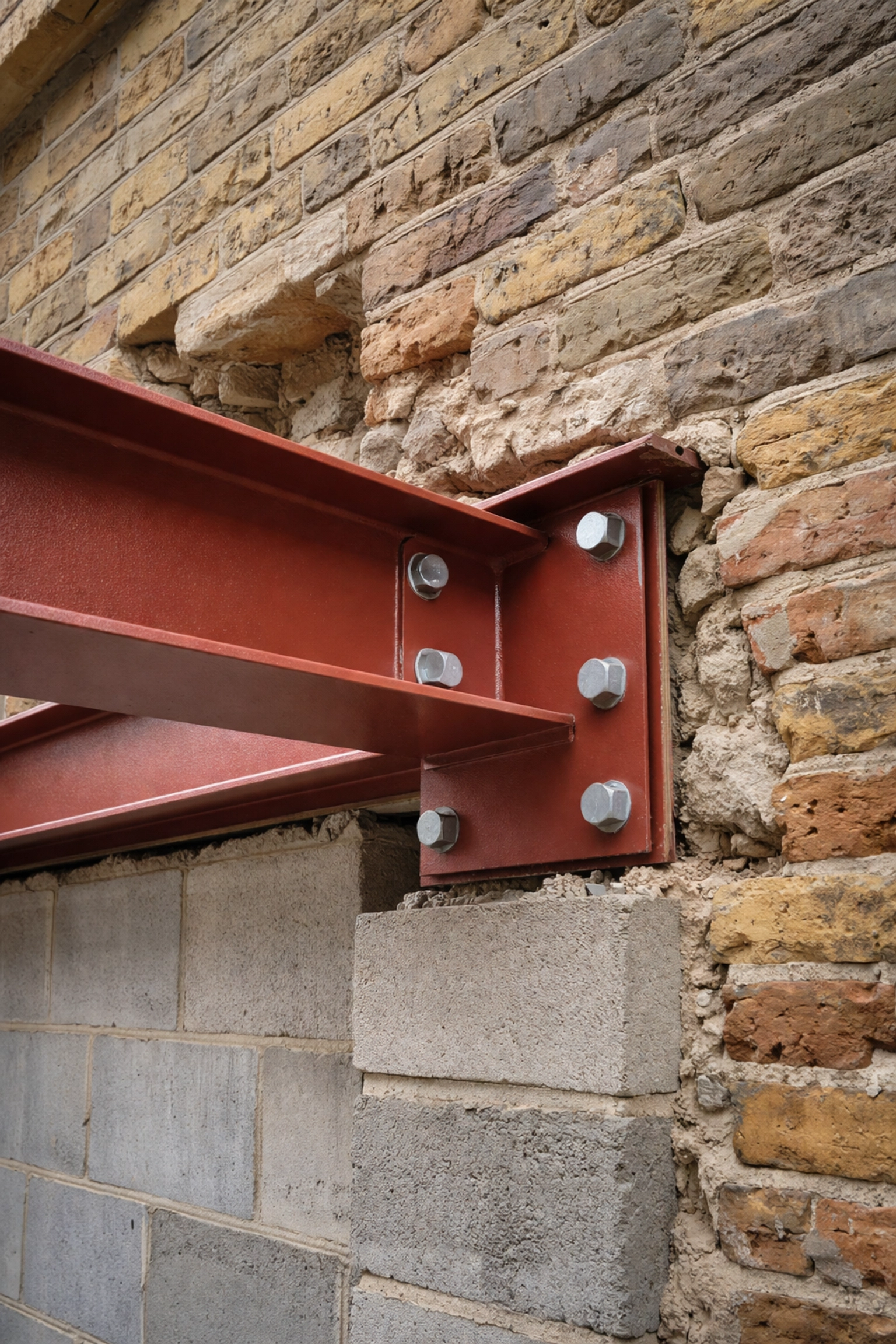
Older properties often have surprises hidden in the walls. A proper structural survey before you start avoids nasty discoveries mid-build.
Choosing on Price Alone
The cheapest quote is rarely the best value. Poorly executed extensions lead to defects, delays, and disappointment. For more on this, our guide on what Chingford builders might not tell you is worth a read.
Forgetting About Storage
Open-plan living looks wonderful in magazines, but real life requires cupboards. Make sure your design includes practical storage solutions.
Making the Right Decision for Your Victorian Terrace
Both side-return and rear extensions can dramatically improve how you live in your East London home. The right choice depends on your property's layout, your lifestyle needs, and your budget.
A side-return extension is often the smart move for Victorian terraces where light and garden space are priorities. A rear extension makes sense when you need a larger footprint and are willing to trade some outdoor space.
Whatever you decide, the key is getting the design right from the start. A well-planned extension adds value, improves daily life, and makes the most of your home's potential.
If you are considering an extension for your Victorian or Edwardian terrace in Walthamstow, Chingford, Epping, or the surrounding areas, get in touch with WJ Construction to discuss your options. We are happy to advise on the best approach for your property.