
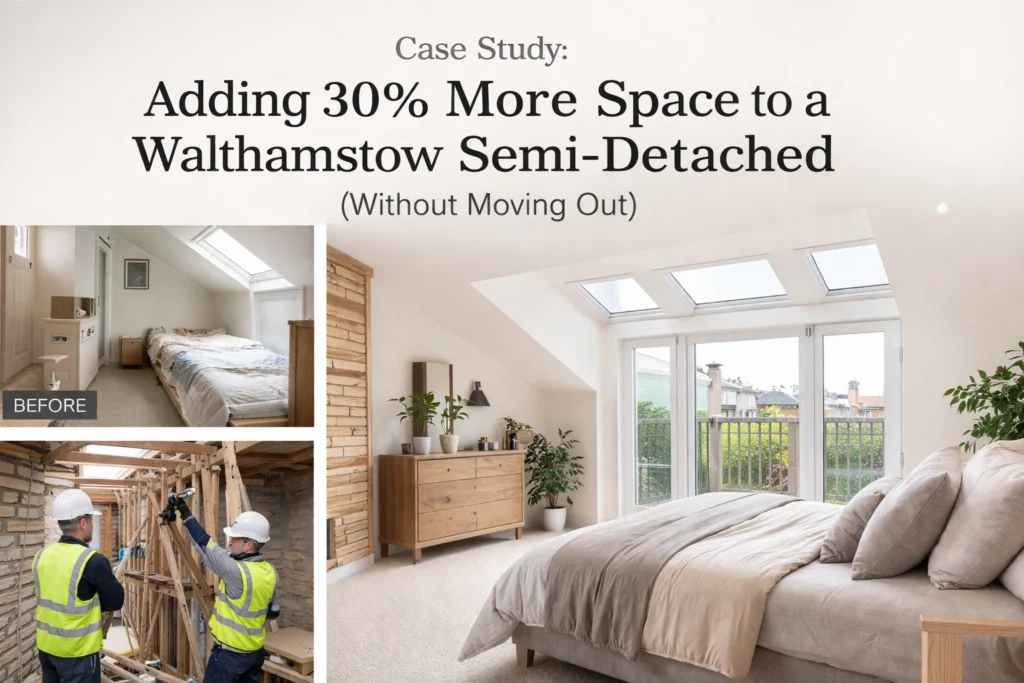
Moving house in Walthamstow has become increasingly difficult. With average property prices continuing to rise and stamp duty costs eating into budgets, many homeowners are choosing to extend rather than relocate. But can you really add significant space to a semi-detached property without the upheaval of moving out during the works? This case study follows one family's journey from cramped living to a transformed home: gaining 30% more usable space while staying put throughout the build.
The Challenge: A Growing Family in a Shrinking Home
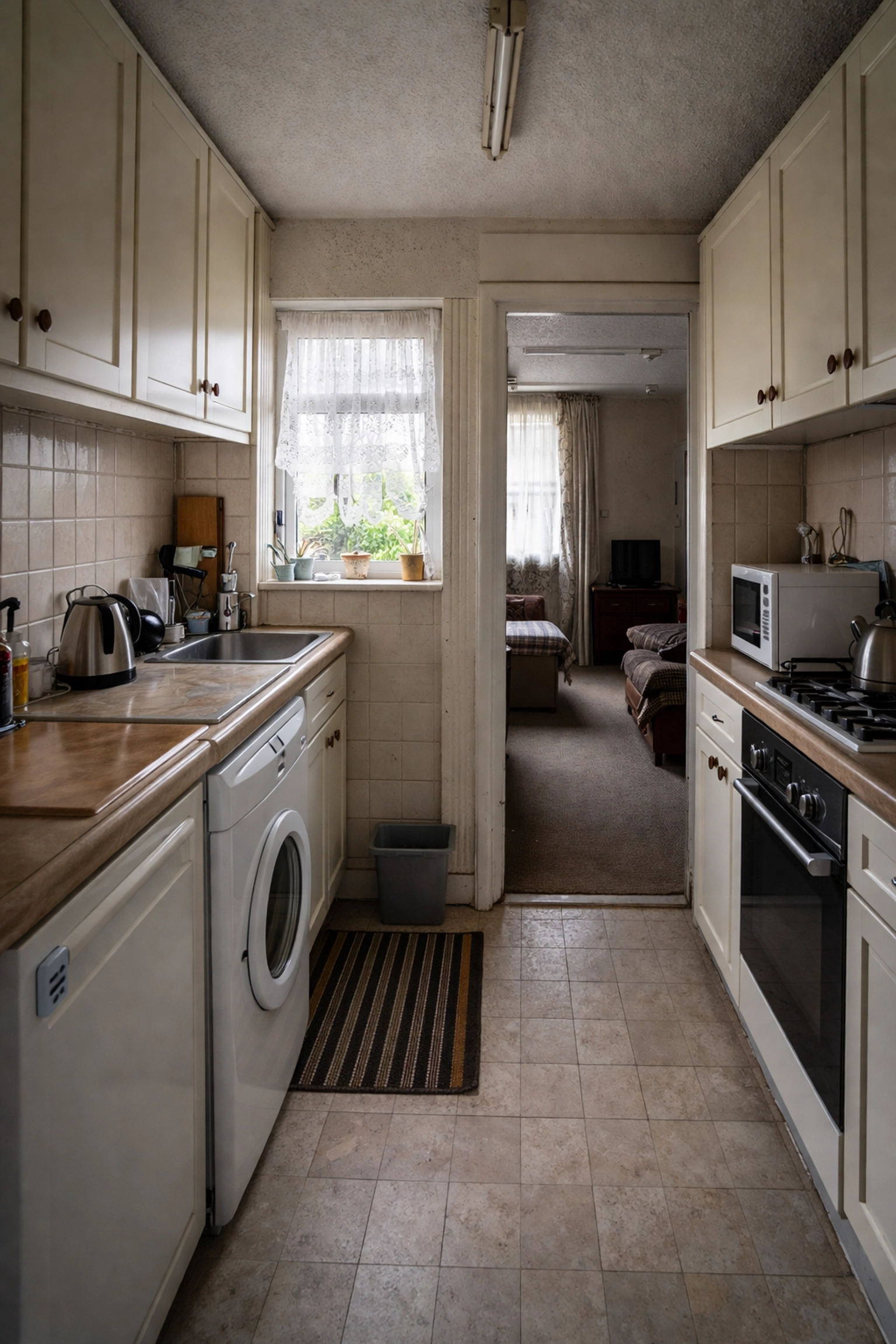
When Sarah and James first contacted us, they were at breaking point. Their three-bedroom 1930s semi on a quiet Walthamstow street had served them well for eight years. But with two children now at secondary school and both parents working from home several days a week, the house simply wasn't working anymore.
Their main frustrations were familiar ones:
- A cramped galley kitchen that couldn't accommodate a dining table
- No dedicated workspace, forcing James to work from the corner of the living room
- A small rear reception room that felt dark and disconnected from the garden
- Limited storage throughout the property
They'd considered moving to a larger property in Chingford or Woodford, but after crunching the numbers, the costs were prohibitive. Estate agent fees, stamp duty, solicitor costs, and the price difference for a four-bedroom home would have set them back over £80,000: money they simply didn't have.
The question became: could they achieve the space they needed by extending instead?
The Solution: A Strategic Combination of Extensions
After visiting the property and understanding how the family actually lived, we proposed a two-part extension strategy that would maximise space without requiring full planning permission.
Rear Extension Under Permitted Development
Semi-detached properties in Walthamstow can extend up to 6 metres from the rear wall under the Larger Home Extension process (prior approval), provided neighbours don't object. This 28-day approval route is faster and simpler than a full planning application.
For Sarah and James, we designed a 5-metre rear extension that would:
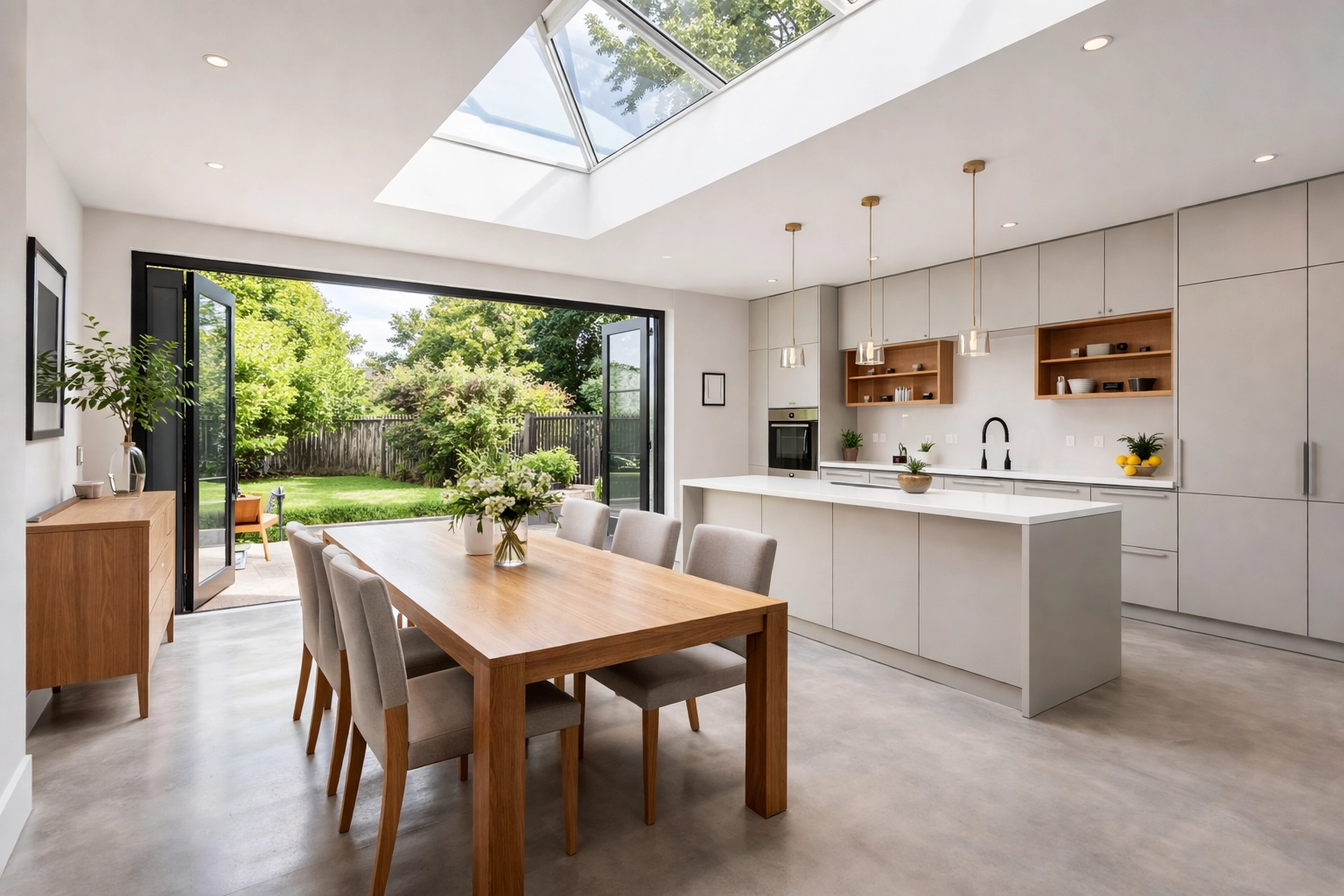
- Create an open-plan kitchen-diner with space for a six-seater table
- Introduce bi-fold doors opening directly onto the garden
- Flood the space with natural light through a large roof lantern
Single-Storey Side Return Extension
The property had an unused side passage: essentially dead space that was only used to store the bins. By extending into this area, we could widen the rear of the house significantly.
This side return extension connected seamlessly with the rear extension, creating one large, L-shaped living space that transformed how the ground floor functioned.
The Numbers
The combined extensions added approximately 42 square metres of usable floor space to the property. Based on the original footprint, this represented just over 30% additional space: all achieved without touching the upper floors or requiring the family to move out.
Navigating Waltham Forest Planning Requirements
One concern Sarah and James had was whether the council would approve the works. They'd heard stories of neighbours having applications rejected and were worried about wasting money on drawings that might never get built.
As experienced Walthamstow builders, we knew the local requirements well. Waltham Forest Council has specific guidelines for extensions, including:
- Side extensions must be set back at least 1 metre from the street-facing building line
- Extensions should appear subordinate to the main house
- Materials should match or complement the existing property
We designed the extension to meet all these criteria from the outset. The prior approval application was submitted and approved within three weeks, with no objections from neighbours.
The Build: How We Kept Disruption to a Minimum
The biggest worry for most families isn't the cost or the planning: it's the disruption. The thought of living in a building site for months on end puts many homeowners off extending altogether.
We approached this project with a clear phasing strategy that allowed Sarah, James, and their children to remain in the property throughout.
Phase One: Groundworks and Foundations
The first three weeks focused on external works: digging foundations, laying drainage, and preparing the structural base. During this phase, the existing kitchen and rear reception room remained fully functional. The family continued using the house as normal, with access maintained through the front door.
Phase Two: Structural Shell
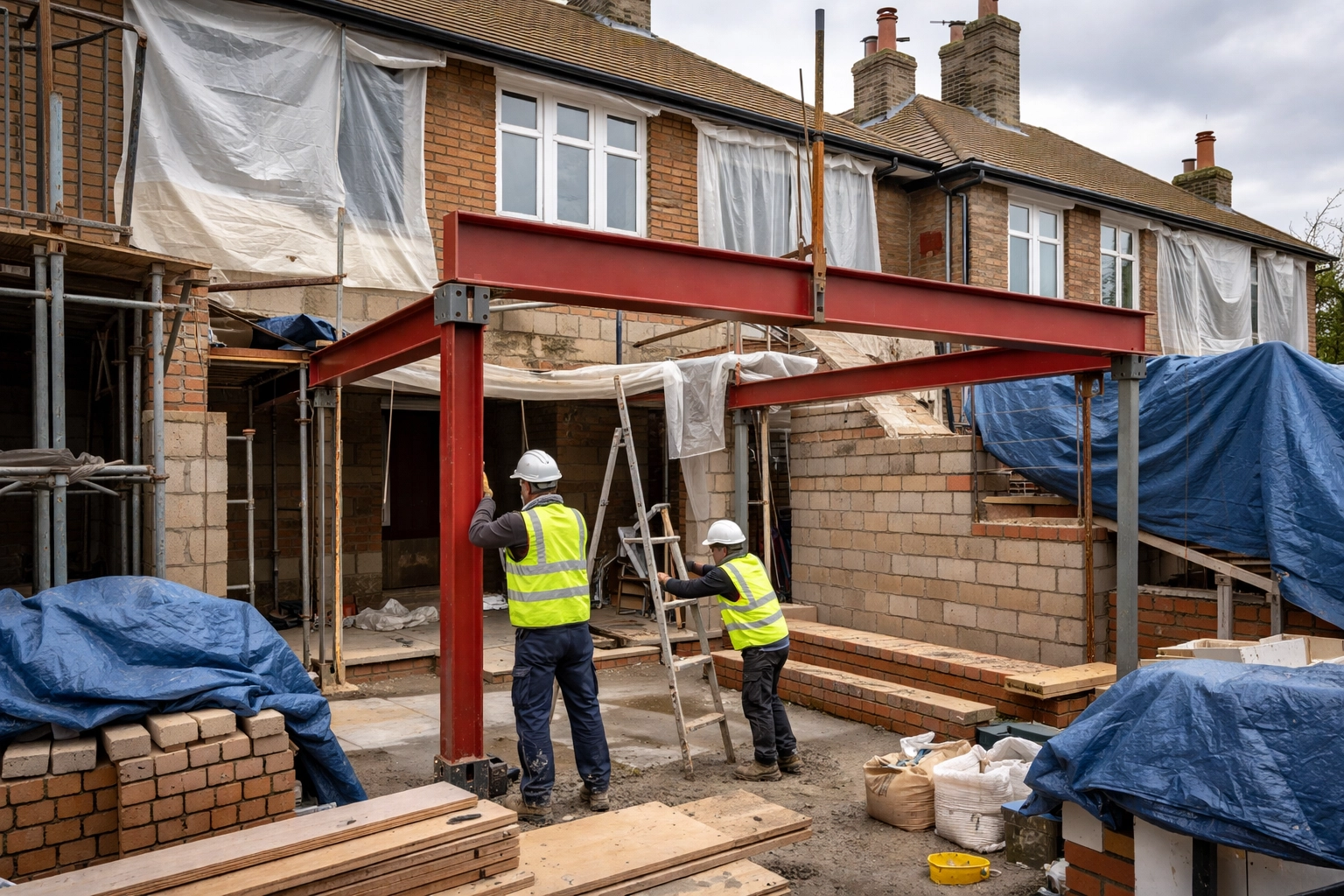
Once the foundations were complete, we erected the structural walls and roof. This was the most intensive period, lasting approximately four weeks. We installed temporary weatherproofing to protect the existing rooms while the new space took shape.
During this phase, we created a temporary kitchen setup in the front reception room. It wasn't ideal, but it meant the family could still cook meals and maintain their routine.
Phase Three: Internal Fit-Out
With the shell complete and watertight, work moved indoors. Plastering, electrics, plumbing, and decoration followed a logical sequence. We isolated the new extension from the existing house until the final knock-through, which happened over a single weekend.
The entire build took 14 weeks from breaking ground to completion.
The Transformation: Before and After
The difference in how the house functions is remarkable.
Before:
- Dark, narrow galley kitchen
- Separate small dining room rarely used
- Rear reception room cut off from the garden
- No dedicated workspace
After:
- Bright, open-plan kitchen-diner spanning the full width of the house
- Direct garden access through 3-metre bi-fold doors
- Integrated home office nook tucked into the side return
- Utility room hidden behind the kitchen, keeping laundry out of sight
The family now uses the rear of the house as their main living space. The original front reception room has become a quiet snug for the children to do homework or for James to take video calls without interruption.
What This Project Cost
Transparency around costs is important. Every project is different, but this extension came in at approximately £85,000 including VAT. This covered:
- All structural works and materials
- Full electrical rewiring of the ground floor
- New kitchen installation
- Underfloor heating throughout the extension
- Bi-fold doors and roof lantern
- Plastering, decoration, and flooring
When compared to the £80,000+ they would have spent on moving costs alone: before even considering the price difference of a larger property: extending made clear financial sense. They also avoided the stress of uprooting the children from their schools and leaving a neighbourhood they loved.
Key Lessons for Homeowners Considering a Similar Project
If you're thinking about extending your semi-detached property in Walthamstow or the surrounding areas, here are the main takeaways from this project:
-
Explore permitted development first – Many extensions don't require full planning permission, which saves time and money.
-
Work with a house extension specialist who knows the local area – Waltham Forest has specific requirements that differ from other London boroughs.
-
Plan for phased construction – With the right approach, you don't necessarily need to move out during the works.
-
Consider the side return – These narrow passages are often overlooked but can add valuable width to your ground floor.
-
Compare the true cost of moving – When you factor in all the associated expenses, extending often proves more economical.
Is Extending Right for Your Home?
Not every property is suitable for this type of extension. Factors like garden size, existing footprint coverage, and neighbouring buildings all play a role. The 50% land coverage rule means some homes have limited scope for expansion.
The best starting point is an honest assessment of what's achievable within your specific constraints. If you're considering a similar project in Walthamstow or elsewhere in East London, get in touch with WJ Construction to discuss your options. We're always happy to visit your property and explain what might be possible: no obligation, just straightforward advice.